

Article reviewed by: Dr. Sturz Ciprian, Dr. Tîlvescu Cătălin and Dr. Alina Vasile
Article updated on: 10-12-2025
EUBS 2025: Hyperbarium shares clinical experiences and innovative solutions
- What is EUBS?
- The importance of EUBS in hyperbaric medicine
- The Hyperbarium study presented at EUBS 2025: the Romanian experience in hyperbaric therapy
- Other studies and teams present at EUBS 2025
- Patient experiences: clinical data and real impact
- What all this means for patients
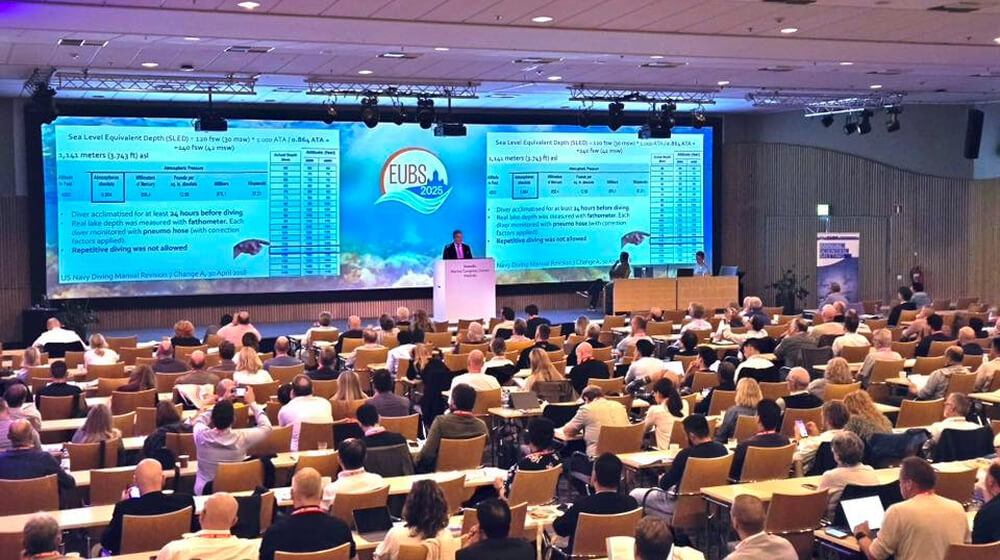
Hyperbarium’s participation at EUBS 2025, held at the Marina Congress Center in Helsinki between September 2–6, marks Romania’s visible entry into the forefront of European scientific dialogue in hyperbaric medicine. The congress brings together physicians, researchers, physiologists, hyperbaric chamber operators and safety experts to discuss recent study results and transform them into modern treatment protocols applicable in centers worldwide.
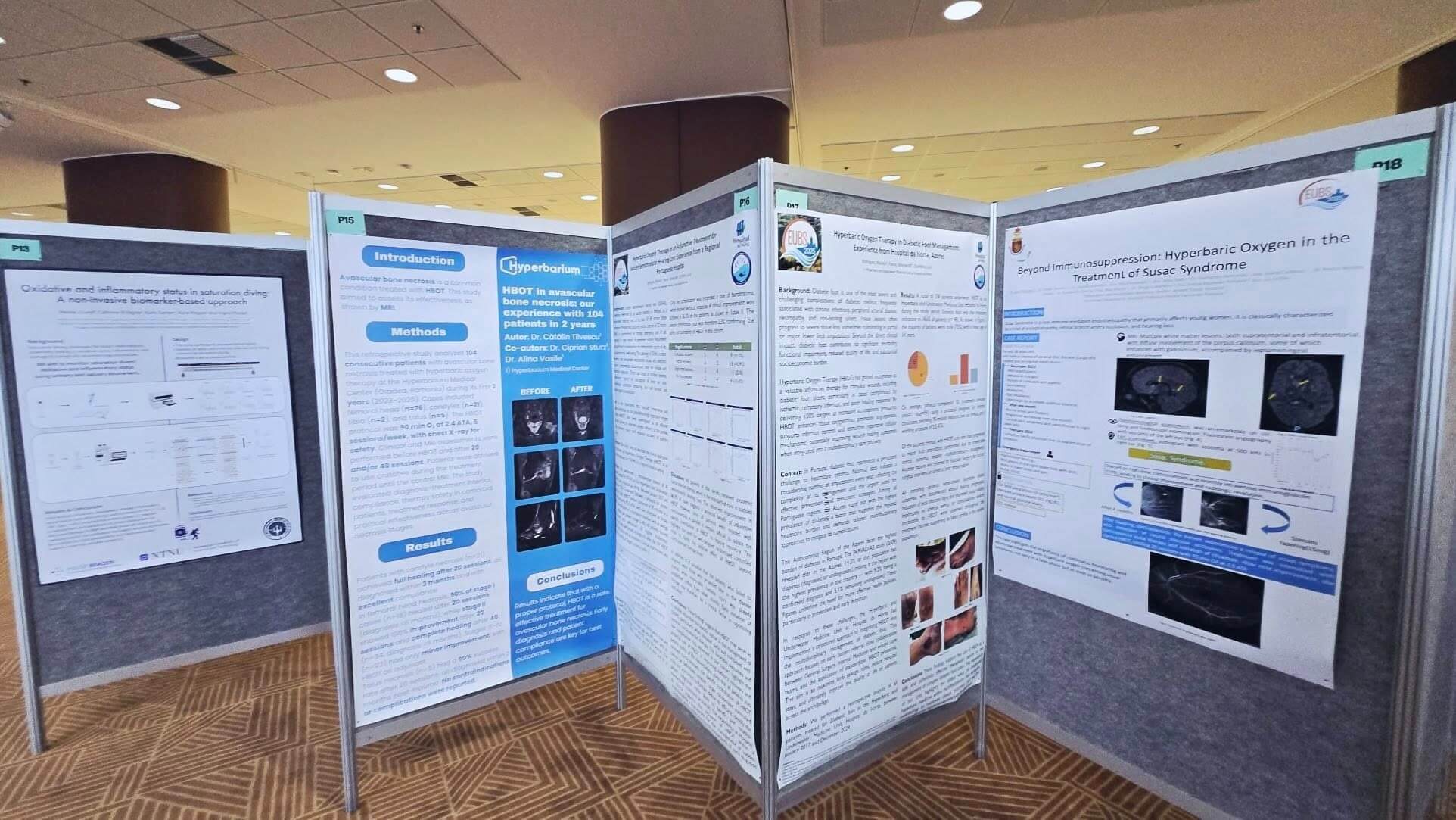
The 2025 edition focused on three major directions: clinical data exchange, reviewing indications for hyperbaric oxygen therapy, and standardizing safety procedures. In this context, Hyperbarium presented the paper “HBOT in avascular bone necrosis: our experience with 104 patients in 2 years,” bringing before the EUBS community a significant series of patients with avascular bone necrosis treated with hyperbaric therapy in Romania. For patients, this means that the treatments offered at Hyperbarium are discussed and validated by the same scientific forums as those of major European centers.
Around this core—combining research, best-practice exchange and clinical application—the entire EUBS activity takes shape: defining the role of hyperbaric oxygen therapy in modern medicine, clarifying its indications and limits, and rigorously documenting what hyperbaric oxygen can concretely achieve for patients with complex pathologies.
What is EUBS?
The European Underwater and Baromedical Society (EUBS) is the European scientific society dedicated to the study and promotion of diving medicine and hyperbaric medicine. Founded in 1971, initially under the name European Underwater and Biomedical Society, its purpose was to create a European platform for research, education and information exchange in this niche—yet essential—field for diver safety and the treatment of a wide range of pathologies.
From the beginning, EUBS has had an interdisciplinary structure: clinicians, physiologists, researchers, engineers, and hyperbaric chamber operators. The society organizes an annual scientific meeting, the EUBS Annual Scientific Meeting, and supports research through the publication of the journal Diving and Hyperbaric Medicine, indexed in international databases and featuring articles on pressure physiology, diving-related accidents, and clinical use of hyperbaric oxygen.
The society’s stated goal is to promote progress in diving medicine and hyperbaric therapy, support education for professionals in the field, and provide a forum where research results can be critically discussed and transformed into best-practice recommendations. Through this, EUBS serves as a reference for centers seeking to build their activity on solid scientific foundations rather than impressions or opinions—important especially for people searching online for information about hyperbaric therapy and needing credible sources.
The importance of EUBS in hyperbaric medicine
For over five decades, EUBS has been one of the institutions shaping the direction of European hyperbaric medicine. Its role goes beyond hosting an annual meeting: it creates a framework where research, clinical practice, and patient safety are continuously aligned. The society supports research initiatives, encourages the development of clinical registries, and promotes the creation of European consensus documents regarding indications and limitations of hyperbaric oxygen therapy. Thus, recommendations issued under EUBS become reference points for clinics aiming to align their protocols with internationally recognized standards.
Another essential aspect is EUBS’s role as an interdisciplinary platform. Hyperbaric medicine does not operate in isolation; it intersects with physiology, emergency medicine, orthopedics, plastic surgery, neurology, ENT, diabetology and rehabilitation. Through its scientific program and publications, EUBS facilitates dialogue between these specialties and creates a common language for evaluating cases, defining indications and measuring results.
In Helsinki, EUBS 2025 served as a shared space for topics that, in everyday practice, are often treated separately. Diving physiology, decompression accidents and pressure-related injuries were discussed in close connection with clinical applications of hyperbaric oxygen therapy in orthopedics, neurological recovery, diabetes, plastic surgery, ENT and oncology. This approach enabled direct transfer of knowledge: the mechanisms by which pressure and gases affect the human body underwater were correlated with how the same principles can be used therapeutically to heal ischemic bone, irradiated tissue or chronic ulcers.
The structure of the sessions encouraged the presentation of complex cases from multiple perspectives—pathophysiological, imaging-based, surgical and functional rehabilitation—emphasizing the complete patient pathway, not just the episode inside the hyperbaric chamber. The organizers’ insistence on close collaboration between the hyperbaric physician, surgeon, radiologist, and rehabilitation specialist sent a clear message: hyperbaric therapy produces meaningful results only when integrated into a multidisciplinary approach, rigorously documented and evaluated using the same methodology in different clinics. Only under these conditions can data be compared, protocols credibly adjusted and patients benefit from a real—not just declarative—standard of care.
In this context, the presentation of Hyperbarium’s data positioned Romania among centers that not only apply established standards but also actively contribute to defining and refining them.
The Hyperbarium study presented at EUBS 2025: the Romanian experience in hyperbaric therapy
Hyperbarium’s presence at EUBS 2025 validated a model of medical practice built in Oradea: a center of excellence in rehabilitation where hyperbaric therapy is integrated with neurology, orthopedics, pulmonology, cardiology, imaging and medical rehabilitation. It is not merely about owning a modern hyperbaric chamber, but about creating a medical ecosystem where decisions are made together, based on the same clinical and imaging data, with the goal of achieving reproducible and long-term monitored results.
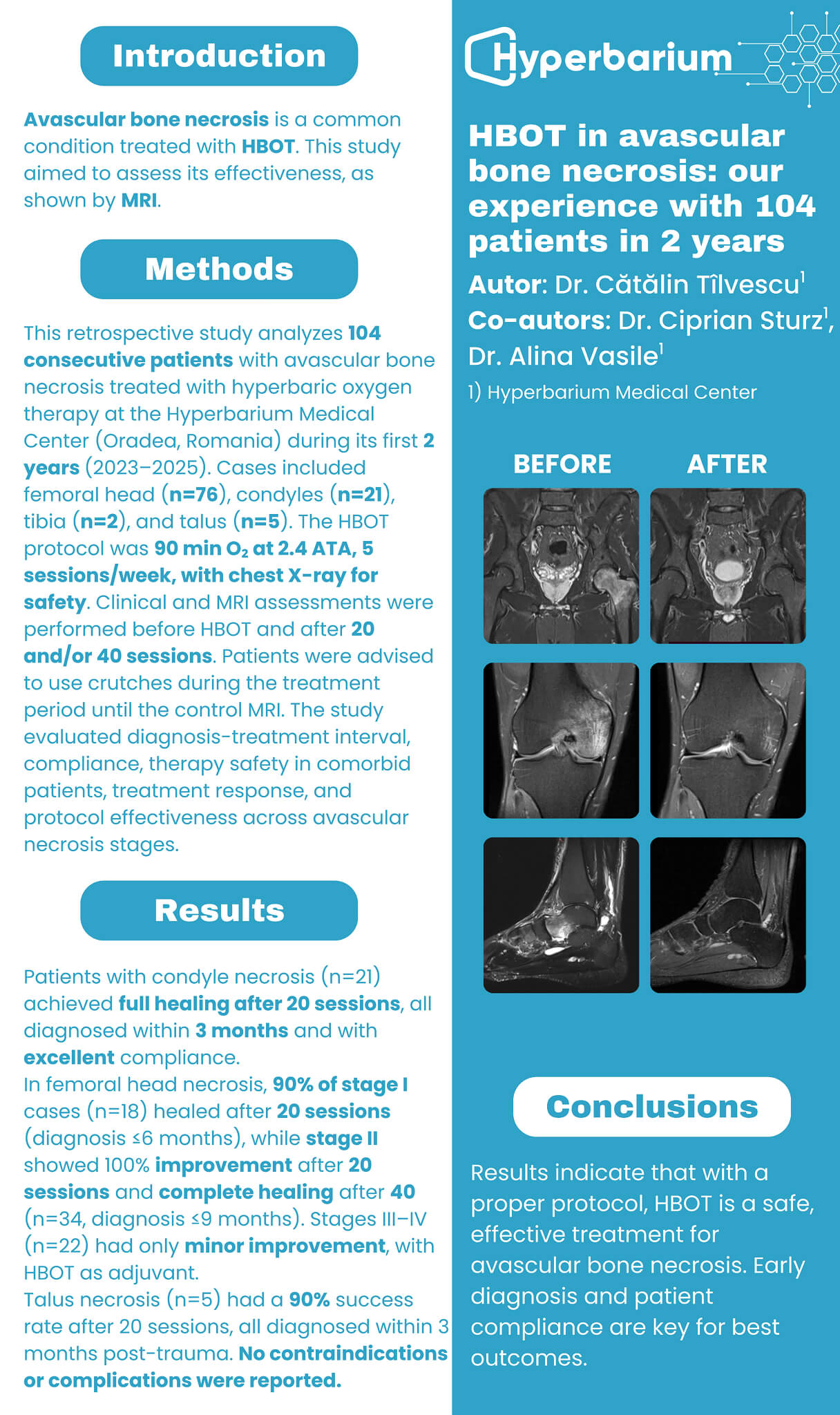
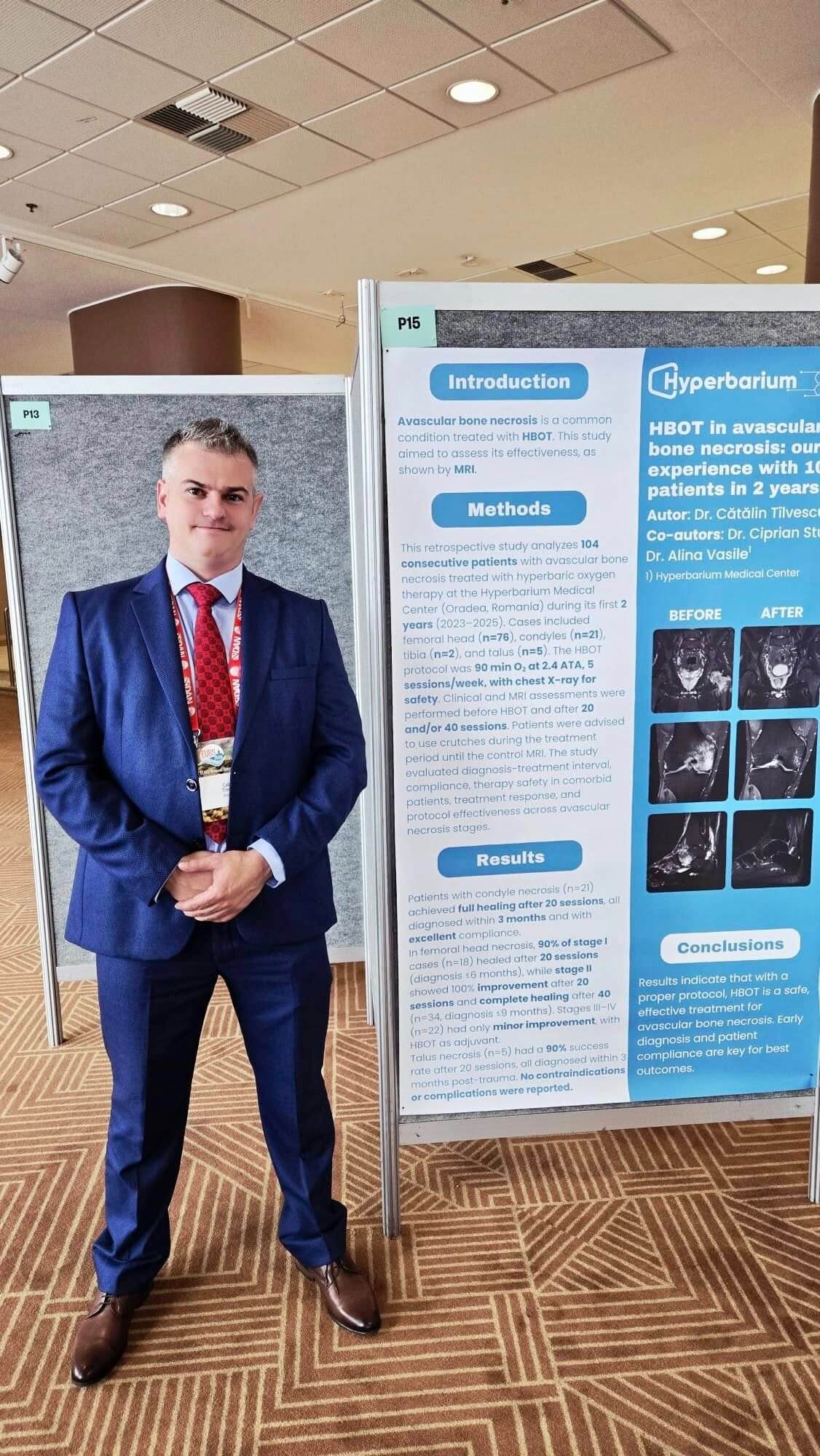
In this context, one of the central moments of EUBS 2025 was the presentation of the paper “HBOT in avascular bone necrosis: our experience with 104 patients in 2 years.” The paper, authored by Dr. Cătălin Tîlvescu together with Dr. Ciprian Sturz and Dr. Alina Vasile, summarized Hyperbarium’s experience with 104 consecutive patients with avascular bone necrosis treated with hyperbaric oxygen over two years. The cases included femoral head necrosis, femoral condyle, tibia and talus involvement, diagnosed via MRI and monitored after 20 and 40-session therapy series.
Results showed that in early disease stages—especially stages I and II of femoral head avascular necrosis—the combination of hyperbaric therapy, appropriate joint protection and medical rehabilitation can lead to imaging-documented remission of lesions and complete symptom resolution. In femoral condyle and talus involvement, patients diagnosed early had very high healing rates after relatively short treatment series. In advanced stages, hyperbaric oxygen therapy played an adjunctive role: reducing pain, improving mobility and preparing patients for future orthopedic interventions.
Presenting this work at EUBS had two major implications. First, it demonstrated that Romanian patients treated at the Oradea hyperbaric clinic show outcomes comparable to those reported by centers with a much longer tradition in hyperbaric medicine. Second, it showed that Hyperbarium does not limit itself to applying imported protocols; it produces its own data series, subject to critical evaluation by the international community. Thus, the Oradea experience becomes part of the knowledge pool that, over time, helps refine indications and adjust recommendations for hyperbaric treatment in avascular bone necrosis.
Beyond the study itself, active participation in discussions, thematic sessions and workshops strengthened Hyperbarium’s profile as a serious partner in the European dialogue. The fact that the data presented were discussed alongside results from centers in Finland, Germany, Italy and France confirms that the evaluation standards used in Oradea align with those in the EUBS network. For Romania, this marks a shift in position: no longer merely a recipient of guidelines developed elsewhere, but a contributor to the evidence base supporting those guidelines.
For patients, the message is concrete. They no longer need to reflexively seek solutions abroad in order to receive evidence-based hyperbaric therapy evaluated under the same scientific conditions as in Western European centers. In Oradea, there is a team that presents its results to the international community, receives feedback, adjusts its protocols and embraces transparency regarding what works and what must be improved.
This positioning strengthens Romania’s role in the professional community and has local and regional impact. Physicians from other cities refer patients to Hyperbarium knowing they will undergo multidisciplinary evaluation and have access to protocols that have passed through rigorous scientific validation. Over time, Oradea is becoming a reference center for patients with complex conditions requiring hyperbaric treatment, whether avascular necrosis, vascular complications in diabetics, chronic osteomyelitis or osteoradionecrosis.
Overall, Hyperbarium’s participation at EUBS 2025 shows that Romania can credibly appear on the international hyperbaric medicine stage when teams combine proper infrastructure with a culture of research and transparency. And the fact that this happens in Oradea is, in itself, proof that medical excellence is built around people and working models—not merely institutional labels.
Other studies and teams present at EUBS 2025
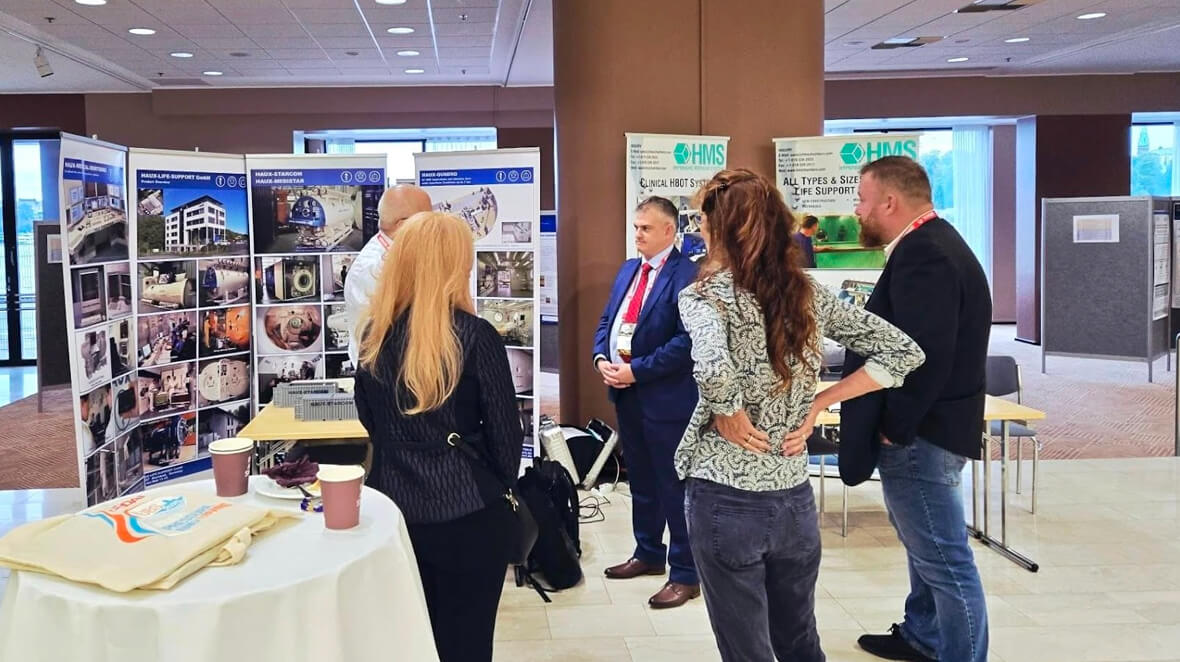
In addition to Hyperbarium’s paper, EUBS 2025 brought together research groups and specialized clinics from around the world, presenting case series and studies dedicated to pathologies in which hyperbaric treatment can decisively change the prognosis. University centers and hyperbaric medical clinics from Northern and Western Europe and other regions presented data on patients with avascular necrosis, chronic osteomyelitis, diabetic ulcers and post-radiotherapy complications, with an emphasis on optimizing indications, dosage and treatment duration. The official congress program, available on the EUBS 2025 website, illustrates this thematic diversity.
A major focus involved patients with cardiovascular and respiratory comorbidities—a category frequently encountered in practice but relatively underrepresented in classic studies. Multidisciplinary teams presented algorithms for monitoring cardiac and pulmonary function during hyperbaric oxygen sessions, risk stratification models and inclusion/exclusion criteria proposals. The goal was to establish a unified evaluation framework so that results can be compared across centers and integrated into European guidelines and consensus documents—including documents such as the “Code of Good Clinical Practice in HBO Therapy,” published under EUBS.
Safety-focused workshops were led by teams with extensive experience in operating hyperbaric chambers and training technicians, often in collaboration with international organizations. They presented protocols for preventing technical incidents, managing emergencies inside hyperbaric chambers, training and recertifying staff, as well as examples of internal safety audits. Participants were also directed to external certification and training resources, such as those offered by the National Board of Diving and Hyperbaric Medical Technology or partner societies.
Meanwhile, methodological working groups proposed ways to standardize outcome reporting: using the same pain scales, internationally validated functional questionnaires, minimum clinical data sets and shared interpretation schemes for MRI or CT images in hyperbaric therapy studies. The connection with the scientific journal Diving and Hyperbaric Medicine, published under EUBS, was explicitly emphasized, as this journal is a key publication platform for research presented at annual meetings.
Taken together, these studies and initiatives show that EUBS 2025 was not merely a sequence of independent presentations, but a coordinated effort by multiple teams to build a unified framework for evaluating and comparing hyperbaric treatment internationally.
Patient experiences: clinical data and real impact
Beyond the EUBS presentation, the real value of Hyperbarium’s experience can be seen in the systematic documentation of patient evolution in the Case Studies – Before and After section on the clinic’s website. Each case includes baseline data, MRI images or clinical photographs, a description of the hyperbaric therapy protocol and the outcome at follow-up.
Examples include aseptic necrosis of the femoral condyle in patients aged 50–70, where initial pain of 7–8/10 decreases significantly after 20–40 hyperbaric sessions, accompanied by reduced bone edema on MRI. In the case of patient S.I., 73 years old, with avascular necrosis of the right femoral condyle, imaging evolution shows important edema remission correlated with functional improvement—from barely walking short distances to nearly normal ambulation after treatment.
Another group consists of young or middle-aged patients with stage I–II aseptic femoral head necrosis, such as patient S.A., 32, or R.M., 36. Their therapy sessions are planned in stages (20 sessions followed by reevaluation), and follow-up MRIs show progressive revascularization of the affected area and stabilization of bone structure, directly improving mobility and quality of life.
There are also advanced cases, such as H.V., 46, with stage III aseptic femoral head necrosis, where the objective is no longer full healing but pain reduction, slowing disease progression and preparing the patient for potential orthopedic intervention under better conditions. Here too, the combination of hyperbaric therapy, risk-factor control and medical rehabilitation brings clear benefits.
For individuals seeking opinions about hyperbaric therapy, these case studies have particular value: they are not general impressions but complete clinical sequences—diagnosis, treatment, reevaluation—showing concrete benefits of hyperbaric oxygen in well-defined conditions (bone necrosis, chronic postoperative wounds, tumor-related complications). When correlated with the presentations at EUBS 2025, they demonstrate that what is discussed in international scientific forums is reflected point-by-point in daily practice at Hyperbarium.
What all this means for patients
For people seeking modern solutions to complex problems—from avascular necrosis and diabetic ulcers to post-radiotherapy complications—Hyperbarium’s participation at EUBS 2025 and the presentation of its own study serve as an added element of trust. It means that the clinic’s protocols are not based on individual opinions but align with what is being discussed and validated in the European scientific community.
Hyperbarium, the hyperbaric clinic in Oradea, does not operate in isolation but as part of a professional network where data are compared, critically analyzed and transformed into clear recommendations and procedures. For patients, this translates into access to objectively evaluated hyperbaric treatment, integrated in a multidisciplinary care pathway: orthopedics, neurology, diabetology, oncology, rehabilitation—and supported by results documented both in studies presented at EUBS and in the clinic’s “before and after” case series.
In this context, natural questions such as “Does it work?” and “What are the actual benefits?” receive answers not only through theoretical explanations about hyperbaric oxygen benefits but also through concrete examples of patients whose pain decreased, mobility improved and major surgeries were postponed or optimized. For those searching for information and opinions about hyperbaric therapy, the fact that Hyperbarium’s experience is presented, discussed and compared at the same level as Western European centers offers a solid reference, beyond subjective impressions or generic promises.
Thus, EUBS 2025 was not only an external confirmation of an already established path but a concrete step in consolidating Hyperbarium’s position as a reference center for hyperbaric medicine and complex rehabilitation in Romania. And for patients, it means they have access—right here—to a form of treatment that meets international standards and is continually connected to developments in the field.