



Article reviewed by: Dr. Sturz Ciprian, Dr. Tîlvescu Cătălin and Dr. Alina Vasile
Article updated on: 13-03-2026
Slow metabolism and chronic fatigue: can hyperbaric therapy help restart the weight loss process?
- Slow metabolism: not your excuse, but a medical reality
- Chronic fatigue: when the body refuses to cooperate
- Obesity in Romania and worldwide: a worrying context
- How hyperbaric therapy helps metabolism
- Insulin resistance: the link between obesity and impaired metabolism
- Metabolic syndrome and the effect of hyperbaric therapy
- Chronic fatigue, ME/CFS and hyperbaric therapy
- Lipid metabolism and the impact of hyperbaric therapy
- What role hyperbaric therapy plays in a weight loss program
- Why is a complete evaluation important?
- How can hyperbaric therapy help you lose weight in a healthy way?
- Hyperbaric therapy price and accessibility: an investment in metabolic health
- How to approach the whole picture: a realistic plan
- Hyperbaric therapy does not cause weight loss, but it can help the body be ready to lose weight
There is a particular frustration in making real efforts — following a diet, going to the gym, trying to sleep better — and still not seeing any meaningful results. Many people eventually begin to believe that their body is deliberately “sabotaging” every attempt to lose weight. And sometimes that is actually the case: the issue is not lack of willpower, but a metabolism that no longer functions efficiently, chronic fatigue that makes sustained effort impossible, or an unresolved medical condition behind the extra kilograms.
People are increasingly looking for complementary, modern solutions that can help an apparently blocked body move forward again. Hyperbaric therapy is one of these complementary options. Although hyperbaric therapy is not a direct weight loss method, some research suggests that it may support metabolism and biological processes involved in healthy weight loss.
How exactly? That is what we will explain next, honestly and based on scientific evidence.
Slow metabolism: not your excuse, but a medical reality
Slow metabolism is a term many people use informally, but it actually reflects a complex medical reality. Basal metabolism represents the amount of energy the body consumes at rest to maintain vital functions: breathing, blood circulation, body temperature, and organ function. When this rate decreases, the body “burns” fewer calories even in the absence of effort.
Several medical causes can lead to a slow metabolism. The most common is hypothyroidism, a condition in which the thyroid gland does not produce enough thyroid hormones. Thyroid hormones essentially regulate the body's metabolic thermostat. Low levels lead to reduced oxygen consumption at the cellular level, decreased ATP synthesis (cellular energy), and a slowdown of almost all metabolic processes. In practical terms, the patient may eat less yet still gain weight, feel constantly tired, experience sensitivity to cold, and have difficulty concentrating.
Beyond thyroid disorders, metabolic syndrome is another factor — a combination of risk elements that include abdominal obesity, high blood pressure, elevated blood glucose, and imbalances in blood lipids (cholesterol and triglycerides). Metabolic syndrome is not a disease with a single mechanism but rather a reflection of accumulated metabolic imbalances over time. In Romania, data show that the prevalence of metabolic syndrome in the adult population may exceed 36%, according to national epidemiological studies.
Chronic stress and lack of sleep are two additional factors that significantly contribute to a slow metabolism. Cortisol, the stress hormone when chronically elevated, blocks fat burning, promotes abdominal fat accumulation, and disrupts insulin receptor function at the cellular level. Lack of quality sleep also affects the hormones that regulate hunger and satiety (ghrelin and leptin), leading to increased appetite and a higher tendency to store fat.
All these causes share a common denominator: they cannot be solved through willpower or stricter dieting alone. They require medical evaluation, proper diagnosis, and appropriate therapeutic intervention. That is why the first step in any serious healthy weight loss program should be a consultation with an internist or endocrinologist to rule out or treat the medical causes behind the problem.
Chronic fatigue: when the body refuses to cooperate
Chronic fatigue is another major obstacle in any weight loss program. We are not referring to normal tiredness after a long day of work that disappears after a good night’s sleep. Instead, we are talking about a persistent state of exhaustion lasting for months, which does not improve with rest and makes even light physical activity difficult.
Chronic fatigue syndrome (ME/CFS – Myalgic Encephalomyelitis/Chronic Fatigue Syndrome) is a complex condition in which the central nervous system, immune system, and cellular metabolism appear to function below normal levels. Patients describe a type of exhaustion unlike anything else: it is not sleepiness or sadness, but simply a lack of energy. Any physical or cognitive effort is followed by worsening symptoms, sometimes lasting days or weeks.
Chronic fatigue makes consistent physical exercise — one of the pillars of healthy weight loss — almost impossible. Without movement, without increasing metabolic rate through activity, and without burning calories through muscular effort, any diet becomes less effective. The body quickly adapts to calorie restriction and further reduces basal metabolic rate, entering a vicious cycle.
Biologically, chronic fatigue is often linked to mitochondrial dysfunction — impaired functioning of mitochondria, the cellular structures responsible for producing the energy needed for all vital processes. Efficient mitochondria convert oxygen and nutrients into ATP; damaged or exhausted mitochondria produce less ATP, more free radicals, and more inflammation. This connection between mitochondrial health, chronic fatigue, and slow metabolism is precisely where hyperbaric therapy may become relevant.
Obesity in Romania and worldwide: a worrying context
Before discussing solutions, it is useful to understand the scale of the problem. According to the World Obesity Atlas 2025, the prevalence of obesity in Romania is approximately 22.5%, meaning nearly 4 million people are obese. Furthermore, 70% of adults in Romania have an increased body mass index (BMI). BMI is calculated simply: body weight in kilograms divided by height squared.
The National Institute of Public Health reports that in 2022 more than 62% of people in Romania were classified as overweight or obese, according to data from the National Institute of Statistics. These figures are not merely statistics — they have direct consequences for population health: increased cardiovascular risk, type 2 diabetes, joint conditions, respiratory problems, depression, and significantly reduced quality of life.
Globally, the World Health Organization estimates that obesity and overweight affect more than 1 billion people, and the problem continues to grow. The medical and social cost of obesity is enormous, which has driven researchers worldwide to search not only for new medical treatments but also for complementary approaches that support the effectiveness of traditional interventions.

How hyperbaric therapy helps metabolism
Hyperbaric therapy essentially involves administering pure oxygen under increased pressure. Oxygen itself is the key link connecting this therapy with metabolism, fatigue, and weight management. Every cell in the body requires oxygen to produce energy. Mitochondria — the cellular structures responsible for ATP production — cannot function without oxygen. When oxygen availability at the cellular level increases significantly, by 10 to 15 times compared to normal conditions during hyperbaric therapy, mitochondria can function more efficiently, produce more ATP, and generate fewer oxidative stress byproducts.
Research has shown that long-term exposure to hyperbaric therapy (20–60 sessions) significantly improves mitochondrial function: ATP production increases, apoptosis signals (premature cell death) decrease, and markers of oxidative stress are reduced. In simpler terms, cells become more efficient at producing and using energy.
There is also an interesting mechanism called the “hyperoxic-hypoxic paradox.” During hyperbaric sessions, cells are exposed to large amounts of oxygen. Between sessions, they return to normal or slightly lower oxygen levels. These repeated fluctuations activate important molecular pathways, including HIF-1α (a transcription factor that stimulates the production of new blood vessels, mitochondria, and cellular protection mechanisms) and SIRT1 (a protein involved in metabolic regulation and cellular protection). Essentially, it acts as a type of “cellular training” that increases the body's metabolic resilience.
Insulin resistance: the link between obesity and impaired metabolism
A central medical concept in understanding slow metabolism and weight loss difficulties is insulin resistance. Insulin is the hormone secreted by the pancreas that allows glucose from the blood to enter cells, where it is converted into energy. When cells become resistant to insulin, glucose remains in the bloodstream at higher levels, the pancreas produces even more insulin to compensate, and high insulin levels in the blood block fat burning. It becomes a vicious cycle: the greater the insulin resistance, the harder it is to lose weight.
Insulin resistance is associated with abdominal obesity, sedentary lifestyle, diets high in sugar and processed fats, and chronic stress. It is the central component of metabolic syndrome and a major risk factor for type 2 diabetes and cardiovascular disease.
The benefits of hyperbaric therapy in the context of insulin resistance have been investigated in an increasing number of studies. A systematic review published in 2025 in “Frontiers in Medicine,” which analyzed all available clinical studies on the subject, concluded that hyperbaric therapy improves fasting blood glucose and reduces insulin resistance, with observable effects starting from the first treatment sessions. Moreover, the authors described improvements in mitochondrial function in skeletal muscle and white adipose tissue, accompanied by increased antioxidant defenses — essentially, cells became more efficient at using glucose.
Another study published in 2021, which investigated the molecular mechanisms through which hyperbaric therapy influences insulin sensitivity, showed that hyperbaric therapy increases levels of adiponectin, a hormone secreted by adipose tissue with multiple beneficial effects: it improves insulin sensitivity, reduces inflammation, and protects blood vessels. Patients treated with hyperbaric therapy had significantly lower HOMA-IR scores (an indicator of insulin resistance; lower values indicate better insulin sensitivity) and higher QUICKI scores (an indicator of insulin sensitivity; higher values are favorable). The same study also demonstrated increases in HDL cholesterol (“good” cholesterol), providing additional cardiovascular benefits.
A clinical study published in 2023, conducted on patients with type 2 diabetes and overweight, showed that hyperbaric therapy rapidly improves insulin sensitivity across the body's main tissues (skeletal muscle, liver, adipose tissue) and reduces fasting blood glucose. It is important to emphasize that these effects appeared alongside standard medical treatment, not as a replacement for it.
All three studies described above essentially say the same thing: hyperbaric therapy is not simply a trendy procedure or treatment. There are real biological mechanisms through which oxygen administered under increased pressure can help cells relearn how to respond to insulin, produce energy more efficiently, and reduce the inflammation that sustains metabolic blockage. For someone who has struggled for years with stubborn weight, slightly elevated blood glucose, or a diagnosis of metabolic syndrome, this means there is a scientific explanation for that frustration — and that there may also be a complementary tool worth discussing with a physician. Not as a standalone solution, not as a replacement for diet or exercise, but as additional support that can make a difference when other interventions alone are no longer enough.

Metabolic syndrome and the effect of hyperbaric therapy
Metabolic syndrome is a medical field in which hyperbaric therapy has demonstrated, in animal models and preliminary human research, significant potential. A review published in 2025, which analyzed the current state of research on hyperbaric oxygen therapy as an adjunct in obesity management, summarized the available results. In metabolic syndrome models, hyperbaric therapy reduced body weight, decreased visceral adipocyte hypertrophy (meaning abdominal fat cells became smaller), normalized lipid profiles, and lowered fasting glucose and insulin concentrations. Markers of non-alcoholic fatty liver disease (a frequent complication of obesity and metabolic syndrome) were also normalized.
The authors concluded that hyperbaric therapy is “a promising adjunctive approach in obesity management through multidirectional improvement of metabolic functions.” This means it acts simultaneously on several levels: glucose metabolism, lipid metabolism, mitochondrial function, chronic inflammation, and oxidative stress — factors that influence one another and collectively sustain metabolic blockage.
It is essential to be clear: these results come primarily from experimental studies and relatively small clinical studies, and translating them into routine clinical recommendations requires larger randomized controlled trials. Hyperbaric therapy is not currently a standard treatment for obesity or metabolic syndrome. However, for patients with multiple clinical indications and a well-structured therapeutic plan, hyperbaric therapy for obesity may represent meaningful additional support.
Chronic fatigue, ME/CFS and hyperbaric therapy
Severe chronic fatigue, especially in the form of ME/CFS, is one of the conditions where hyperbaric therapy is being actively studied. The Charité Clinic in Berlin, one of the most prestigious medical institutions in Europe, is conducting a prospective clinical study to evaluate the effects of hyperbaric therapy in patients with ME/CFS, using a protocol of five sessions per week for eight weeks.
Preliminary results are encouraging. A study published in 2025 by Scheibenbogen and collaborators showed that hyperbaric therapy significantly improves physical functioning in patients with ME/CFS (effect size g=0.71), reduces pain (g=0.79), and lowers fatigue levels (g=0.87). Additionally, magnetic resonance imaging demonstrated normalization of thalamic connectivity (the thalamus is a brain region involved in sensory processing and sleep regulation), returning to activity levels closer to normal. These findings suggest that hyperbaric therapy may influence not only symptoms but also the functioning of the central nervous system itself.
Why does this matter in the context of healthy weight loss? Because in patients with severe chronic fatigue, no traditional weight loss program can work effectively. Without energy, there is no physical exercise. Without exercise, metabolism remains slow, muscle mass declines, and the only result of dieting is feeling worse. If hyperbaric therapy can reduce chronic fatigue and improve exercise capacity, it creates the conditions for other interventions — such as diet, movement, and medical treatment — to work better.
Lipid metabolism and the impact of hyperbaric therapy
Another important angle is the effect of hyperbaric therapy on fat metabolism. A study published in 2025 investigated the effect of HBOT on lipid profiles and fat metabolism in animal models. The results showed that hyperbaric therapy improved blood lipid profiles and was associated with a reduction in body weight.
The proposed mechanisms are multiple. Additional oxygen available under hyperoxic conditions may optimize mitochondrial function and stimulate fatty acid oxidation — meaning the burning of fat as an energy source. Hyperbaric therapy may also stimulate lipolysis (the breakdown of stored fat in adipocytes) by activating enzymes involved in lipid metabolism. A third mechanism is the inhibition of adipogenesis, the formation of new fat cells, through changes in the tissue microenvironment.
Levels of adipokines — hormones secreted by adipose tissue that regulate glucose and lipid metabolism — are also influenced by hyperbaric therapy. Experimental studies have shown that hyperbaric oxygen therapy modifies levels of leptin, adiponectin, and resistin. Adiponectin, in particular, is an adipokine with beneficial metabolic effects: it increases insulin sensitivity, stimulates fatty acid oxidation, reduces inflammation, and has cardiovascular protective effects. The increase in adiponectin observed after hyperbaric therapy suggests that it may contribute to restoring metabolic balance at a deep molecular level.
In simple terms, these studies suggest that hyperbaric therapy can directly influence how the body manages fat — not just how much you eat or how much you move, but what happens at the cellular level with fat that is already stored. If you have unbalanced cholesterol levels, stubborn abdominal fat, or have been told by your doctor that you “burn fat slowly,” the mechanisms described above are relevant to you. Your body already has the systems needed to break down fat and use it for energy; hyperbaric therapy appears to activate and optimize these systems, especially when their function has slowed due to chronic inflammation, oxidative stress, or impaired mitochondrial metabolism. It is not about spectacular calorie burning inside the hyperbaric chamber, but about something more subtle and lasting: restoring the internal mechanisms that determine how and when the body uses fat reserves.
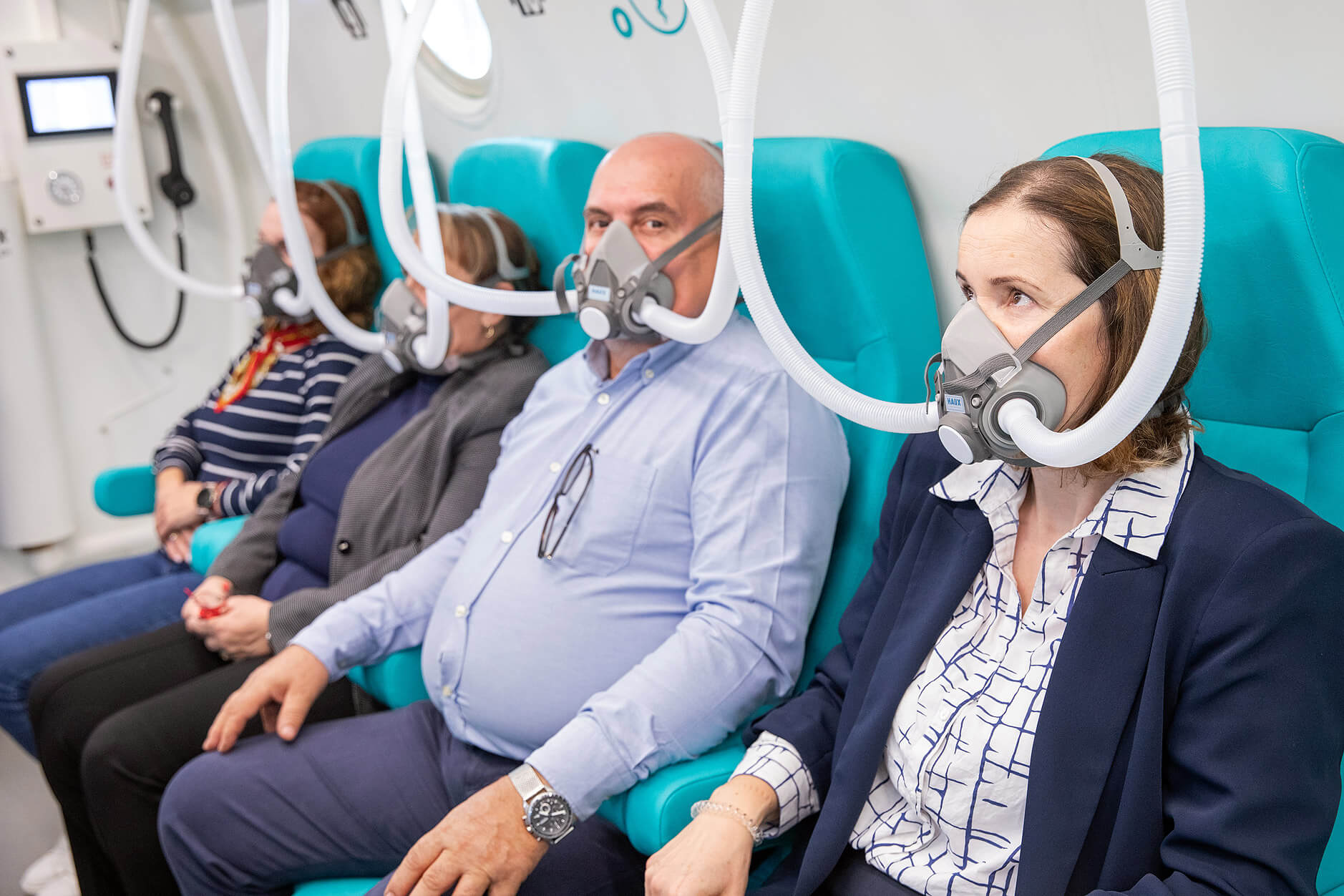
What role hyperbaric therapy plays in a weight loss program
It is time to be clear and balanced. The benefits of hyperbaric therapy in the context of weight loss do not mean that you can enter a hyperbaric chamber and lose weight without doing anything else. It does not work that way.
Hyperbaric therapy can be a useful adjunct, especially for patients dealing with one or more of the following factors:
- Insulin resistance or diagnosed metabolic syndrome, where the molecular mechanisms of hyperbaric therapy (increased insulin sensitivity, improved mitochondrial function, rebalancing of adipokines) can support the overall therapeutic effort.
- Chronic fatigue or ME/CFS that makes consistent physical exercise impossible, where reducing fatigue through hyperbaric therapy may create the conditions for the gradual reintroduction of physical activity.
- Complications of diabetes mellitus, especially ischemic diabetic foot or lower limb ulcers, where hyperbaric therapy is recognized as a complementary treatment with strong evidence, helping wound healing and reducing the risk of amputation.
- Low-grade chronic inflammation associated with obesity and metabolic syndrome, where the anti-inflammatory and antioxidant effects of hyperbaric therapy may be beneficial.
- Post-bariatric surgery or another medical intervention related to obesity, where hyperbaric therapy may support healing and recovery.
In none of these situations does hyperbaric therapy replace diet, physical activity, medication, consultation with an endocrinologist, or consultation with a nutritionist. It is added as an extra tool to a well-designed therapeutic plan coordinated by a medical team.
Why is a complete evaluation important?
One of the biggest mistakes in approaching a weight problem is jumping straight to solutions without understanding the cause. Restrictive diets without a diagnosis? No lasting success. “Metabolism” supplements? No medical foundation. Even hyperbaric therapy, without proper medical evaluation, will not bring the expected results.
One of the biggest mistakes in approaching a weight problem is jumping straight to solutions without understanding the cause. Restrictive diets without a diagnosis? No lasting success. “Metabolism” supplements? No medical foundation. Even hyperbaric therapy, without proper medical evaluation, will not bring the expected results.
A complete medical evaluation for a person with a slow metabolism and difficulty losing weight should include hormonal tests (TSH, T3, free T4, fasting insulin, cortisol), a complete lipid profile, fasting blood glucose and HbA1c, a clinical examination with waist circumference measurement and BMI calculation, blood pressure assessment, and cardiovascular function evaluation. These data allow the doctor to determine whether there is a treatable medical cause for the slow metabolism, whether metabolic syndrome or insulin resistance is present, and what complex therapeutic plan is most appropriate.
At Hyperbarium, the mandatory medical consultation prior to any series of hyperbaric treatments evaluates exactly these aspects. It is an essential step, not just a formality.
How can hyperbaric therapy help you lose weight in a healthy way?
The concept of healthy weight loss does not mean rapid weight reduction by any means necessary. It means a gradual, sustainable reduction in fat mass (especially visceral abdominal fat), while preserving muscle mass, normalizing metabolic parameters, and improving energy levels and quality of life.
Hyperbaric therapy, in the context of a comprehensive healthy weight loss program, may contribute to several of these goals. Experimental studies show a reduction in visceral adipocyte hypertrophy and normalization of the lipid profile. Clinical studies show improved insulin sensitivity and blood glucose levels. Research on chronic fatigue shows increased exercise capacity and overall physical functioning.
What is harder to quantify, but no less important, is the psychological and motivational effect. A patient who, after years of frustration, feels they have more energy, sleeps better, and can go for a walk without complete exhaustion is a patient who will adhere better to all the other components of a weight loss program.

Hyperbaric therapy price and accessibility: an investment in metabolic health
The price of hyperbaric therapy is one of the first considerations patients in Romania take into account. At Hyperbarium Clinic Oradea, an individual session costs between 400 and 500 RON, depending on the number of sessions completed. There is also a mandatory prior medical consultation, costing 250 RON, which determines whether the therapy is suitable for each patient's situation.
In the context of healthy weight loss and metabolic recovery, a typical protocol may consist of 20–30 sessions administered 5 times per week. This is a significant investment, which should be considered in the broader context of medical costs, quality of life, and long-term benefits. Compared with the cost of untreated complications of obesity or metabolic syndrome — diabetes, cardiovascular disease, surgeries, hospitalizations — investment in preventive and complementary therapies takes on a different value.
It is important to mention that, at present, hyperbaric therapy for obesity or metabolic syndrome is not reimbursed by the National Health Insurance House, as it functions as a complementary therapy paid for by the patient.
How to approach the whole picture: a realistic plan
If you recognize yourself in the descriptions above — slow metabolism, chronic fatigue, stubborn weight no matter what you try — the most important message is this: you are not alone, and there are real medical reasons that may explain what you are experiencing.
The process of metabolic recovery is usually long and requires patience and a well-coordinated medical team. The essential steps include a complete medical evaluation to identify treatable causes; appropriate medication for hypothyroidism, insulin resistance, metabolic syndrome, or other diagnosed conditions; a personalized nutrition plan developed by a nutritionist; a physical activity program adapted to current functional capacity and gradually increased; management of chronic stress and improvement of sleep; and, where indicated, complementary therapies such as hyperbaric therapy, Vitamin Therapy, or other options available at the clinic.
Hyperbaric therapy fits into this plan as support for mitochondrial function, insulin sensitivity, reduction of chronic inflammation, and combating fatigue. It is not a shortcut. It is a complementary medical tool, with solid biological foundations and growing clinical evidence, that may make a difference for certain patients.
Hyperbaric therapy does not make you lose weight, but it can help your body be ready to lose weight
The benefits of hyperbaric therapy in the context of slow metabolism and chronic fatigue are not a myth, but neither are they an exaggerated promise. Research shows that this therapy may improve insulin sensitivity, support mitochondrial function, reduce low-grade chronic inflammation, stimulate lipid metabolism, and increase exercise capacity in patients with chronic fatigue. All these effects create a more favorable ground for healthy weight loss and sustainable metabolic recovery.
But context matters enormously. Hyperbaric therapy makes sense as part of a complex, personalized medical plan built together with specialist doctors. At Hyperbarium, this integrated approach is possible: from the mandatory prior medical consultation, to hyperbaric therapy with certified equipment, to Vitamin Therapy and nutrition and diabetes consultations, all the elements needed for a serious metabolic recovery journey can be accessed under the same roof.
If you want to find out whether hyperbaric therapy can be supportive in your specific case, the best first step is a medical consultation. Not because there is a universal solution, but because every case is different and deserves an approach tailored to it.