

Article reviewed by: Dr. Sturz Ciprian, Dr. Tîlvescu Cătălin and Dr. Alina Vasile
Article updated on: 13-03-2026
Hyperbaric Therapy in Cluj: What Options Are Available?
- What is hyperbaric therapy (HBOT)?
- National premiere: the hyperbaric chamber at the Recovery Hospital in Cluj-Napoca
- Where can you undergo hyperbaric therapy in Cluj-Napoca?
- How much does hyperbaric therapy cost in Cluj?
- The strategic partnership with Hyperbarium Clinic Oradea
- Why do people from Cluj come to Hyperbarium Oradea?
- Which conditions can benefit from recovery through hyperbaric therapy?
- Frequently asked questions about hyperbaric therapy in Cluj
If you live in Cluj-Napoca or the surrounding areas and are looking for information about hyperbaric therapy, there are a few important things to know. The oxygen therapy services market in Romania is quite fragmented and sometimes confusing for patients: there are certified medical hyperbaric chambers, wellness capsules aggressively promoted as medical treatments, and more recently, initiatives to introduce this therapy into the public healthcare system.
At the Clinical Recovery Hospital in Cluj-Napoca, preparations are underway to introduce hyperbaric therapy, but the building and dedicated facilities are still being arranged, and the treatment is not yet reimbursed by the National Health Insurance House.
At present, the only accredited hyperbaric medicine center in western Romania is Hyperbarium Clinic in Oradea, which also provides specialized consultancy for implementing this therapy at the Clinical Recovery Hospital in Cluj-Napoca.
What is hyperbaric therapy (HBOT)?
Medical hyperbaric therapy involves breathing 100% pure oxygen in a special chamber pressurized to approximately 3 atmospheres absolute (ATA). At this pressure, oxygen is no longer transported only by red blood cells but also dissolves directly into the plasma and reaches tissues with poor circulation. There it stimulates cellular regeneration, reduces inflammation, and supports the body’s natural healing processes.
As explained by Dr. Ciprian Sturz, medical director of Hyperbarium:
“In many chronic conditions, the affected tissues do not receive enough oxygen to heal properly. Hyperbaric therapy helps the body overcome this limitation and can become an important support in the recovery process. Hyperbaric medicine is already an important component of treatment in many medical centers around the world due to its effects on regeneration and healing processes.”
Hyperbaric therapy is used in both acute and chronic conditions such as neurological injuries, burns, diabetic foot ulcers, bone necrosis (osteonecrosis), post-stroke recovery, chronic infections, osteomyelitis, Lyme disease, post-COVID complications, peripheral neuropathies, post-radiotherapy injuries, or carbon monoxide poisoning.
It is a non-invasive procedure with clinically proven benefits across multiple medical specialties, including neurology, orthopedics, diabetology, dermatology, infectious diseases, rehabilitation medicine, and emergency medicine.
👉 Learn more about hyperbaric therapy and the treatments available at Hyperbarium
National premiere: the hyperbaric chamber at the Recovery Hospital in Cluj-Napoca
The good news for residents of Cluj is that things are changing. The Clinical Recovery Hospital in Cluj-Napoca recently acquired the first multiplace hyperbaric chamber in a public hospital in Romania, a significant investment and a sign that Romanian rehabilitation medicine is making important progress.
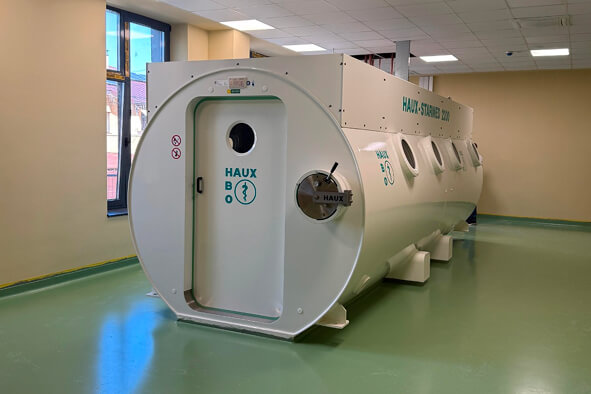
The chamber installed in Cluj is a class IIB medical device, certified according to European standards, with a capacity of up to 8 patients (plus 2 places in the antechamber). It operates at pressures up to 3
ATA, is equipped with high-performance low and high-pressure compressed air systems, and the oxygen administered through the mask is pure medical oxygen. In short, it allows the treatment of serious conditions
at truly therapeutic parameters.
At the time of publishing this article (early 2026), the chamber is not yet in clinical use because the building and surrounding facilities are still under construction. At the same time, work is ongoing to establish the legal framework for operation and reimbursement. The hospital already has several doctors certified in hyperbaric medicine from various specialties, and the new department will operate within a hospital setting with direct medical supervision and a multidisciplinary team.
The hospital’s manager, Dr. Sanda Lidia Patrichi, explained the project in the press:
“Our proposal, which was accepted, aimed to locate a group room, with class A safety standard, multi-person. It has a capacity of eight seated people. In addition, the chamber allows alternative configurations, for example: two people on stretchers, two in wheelchairs, or seated. These chambers reduce the risk of claustrophobia and help patients relax. (...) The hyperbaric chamber will be put into use next year. At the moment, the space is being arranged, which will take approximately six to seven months. It will serve, on average, 1,000 patients per year. The final acquisition cost amounts to 5,865,000 lei.” (Viața Medicală)
Initially, treatment will address a limited number of officially recognized conditions, most likely diabetic foot, gas poisoning, osteonecrosis, and post-radiotherapy complications, with the final list expected to be finalized during this year.
Where can you undergo hyperbaric therapy in Cluj-Napoca?
Currently, medical hyperbaric therapy (HBOT) is not available in private clinics in Cluj-Napoca. Although the Clinical Recovery Hospital in Cluj-Napoca is making every effort to make this therapy available, the process is complex and lengthy, so the service is not yet accessible to patients.
At this time, patients from Cluj looking for real medical hyperbaric therapy (HBOT) usually turn to centers in other cities, such as Hyperbarium Oradea, the only accredited hyperbaric medicine center in western Romania, or to other accredited medical centers in Romania or abroad.
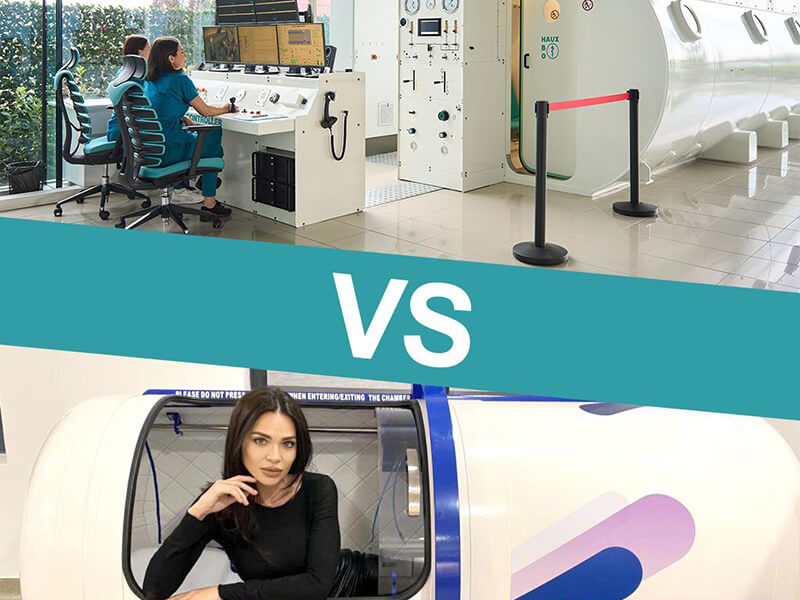
Private clinics in Cluj generally offer only mHBOT sessions (mild hyperbaric oxygen therapy), meaning mild hyperbaric exposure performed in monoplace capsules for a single person in a horizontal position. These operate at lower pressures, around 1.3 ATA, and use oxygen-enriched air through a concentrator rather than pure medical oxygen.
It is important to know that these devices are not medical hyperbaric chambers. They do not have medical patient monitoring systems, do not operate according to clinical protocols, and do not provide the same treatment conditions as medical hyperbaric therapy.
The difference is significant. mHBOT-type capsules increase pressure by only about 0.3 atmospheres above atmospheric pressure and use oxygen-enriched air rather than 100% pure medical oxygen. Under these conditions, the amount of oxygen reaching the tissues is much lower and the therapeutic effects are very limited.
In Cluj, some aesthetic salons or private clinics promote these capsules as equivalent to medical hyperbaric therapy, which can create confusion for patients. Therefore, it is important to understand the difference between medical HBOT and mHBOT before choosing a treatment.
👉 Find out why cosmetic capsules cannot replace real medical therapy
How much does hyperbaric therapy cost in Cluj?
The differences are both in cost and in medical standards:
- A session in mild hyperbaric wellness capsules (mHBOT) in Cluj usually costs between 180 and 300 lei and lasts approximately 60 minutes.
- Medical hyperbaric therapy (HBOT) costs in Romania between 400 and 700 lei per session, with an average duration of around 120 minutes. In other countries, the price often exceeds 300 euros and can reach 600 euros per session in some clinics.
- At Hyperbarium Oradea, the only accredited private hyperbaric medicine center in western Romania, the price ranges between 400 and 500 lei per session depending on the number of sessions.
Currently, the National Health Insurance House (CNAS) does not reimburse hyperbaric therapy procedures, so regardless of where you go, the cost is paid by the patient. For this reason, it is essential that the therapy is truly effective.
The conclusion is simple: if you have a serious medical condition and are looking for hyperbaric therapy in Cluj, check whether the equipment is medically certified (certified HBOT, class IIB), whether it uses 100% pure medical oxygen, whether it has up-to-date certifications and technical inspections, and whether the procedure is carried out under medical supervision. It is important to know that medical hyperbaric therapy (HBOT) is a complex medical procedure that involves certified equipment and specialized personnel.
The strategic partnership with Hyperbarium Clinic Oradea
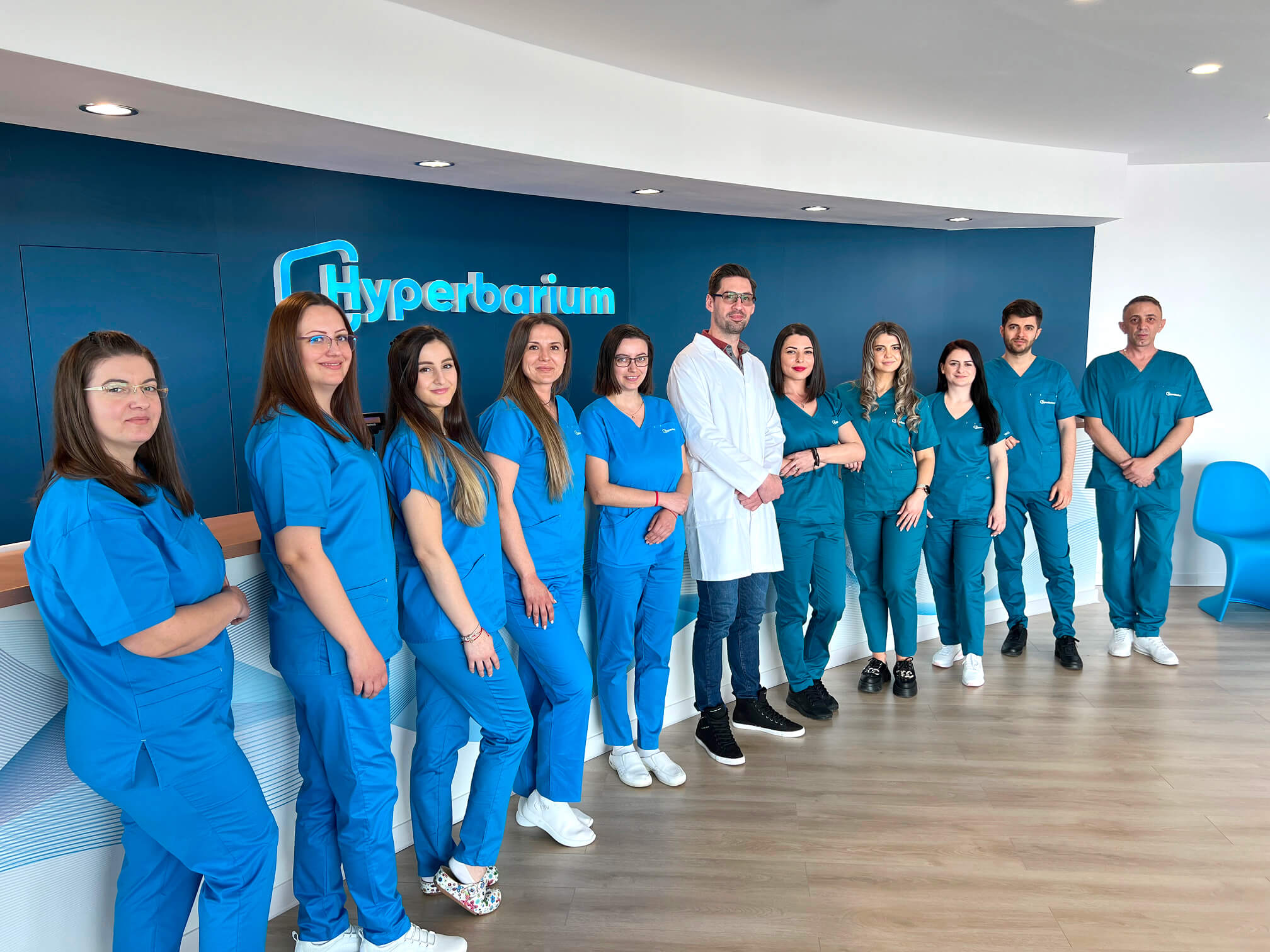
An important detail that many people do not know: in order to put the hyperbaric chamber in Cluj into operation under maximum safety and clinical efficiency conditions, the Clinical Recovery Hospital in Cluj-Napoca signed a collaboration protocol in 2025 with Hyperbarium Oradea, the only accredited hyperbaric medicine center in western Romania and one of the most modern in the country.
Within this collaboration, the Hyperbarium team provides integrated consultancy that includes the development of therapeutic protocols according to international standards, testing the equipment under real pressure conditions, staff training, and support in evaluating both technical and medical personnel, as well as defining patient eligibility criteria. The goal is for the hyperbaric chamber in Cluj to operate from the very first day according to international medical standards, under optimal safety and efficiency conditions.
Why do people from Cluj come to Hyperbarium Oradea?
Many patients from Cluj and across Transylvania travel approximately 150 km to Oradea for real medical hyperbaric therapy. The reasons are mainly related to the type of equipment, medical standards, and the experience of the team.
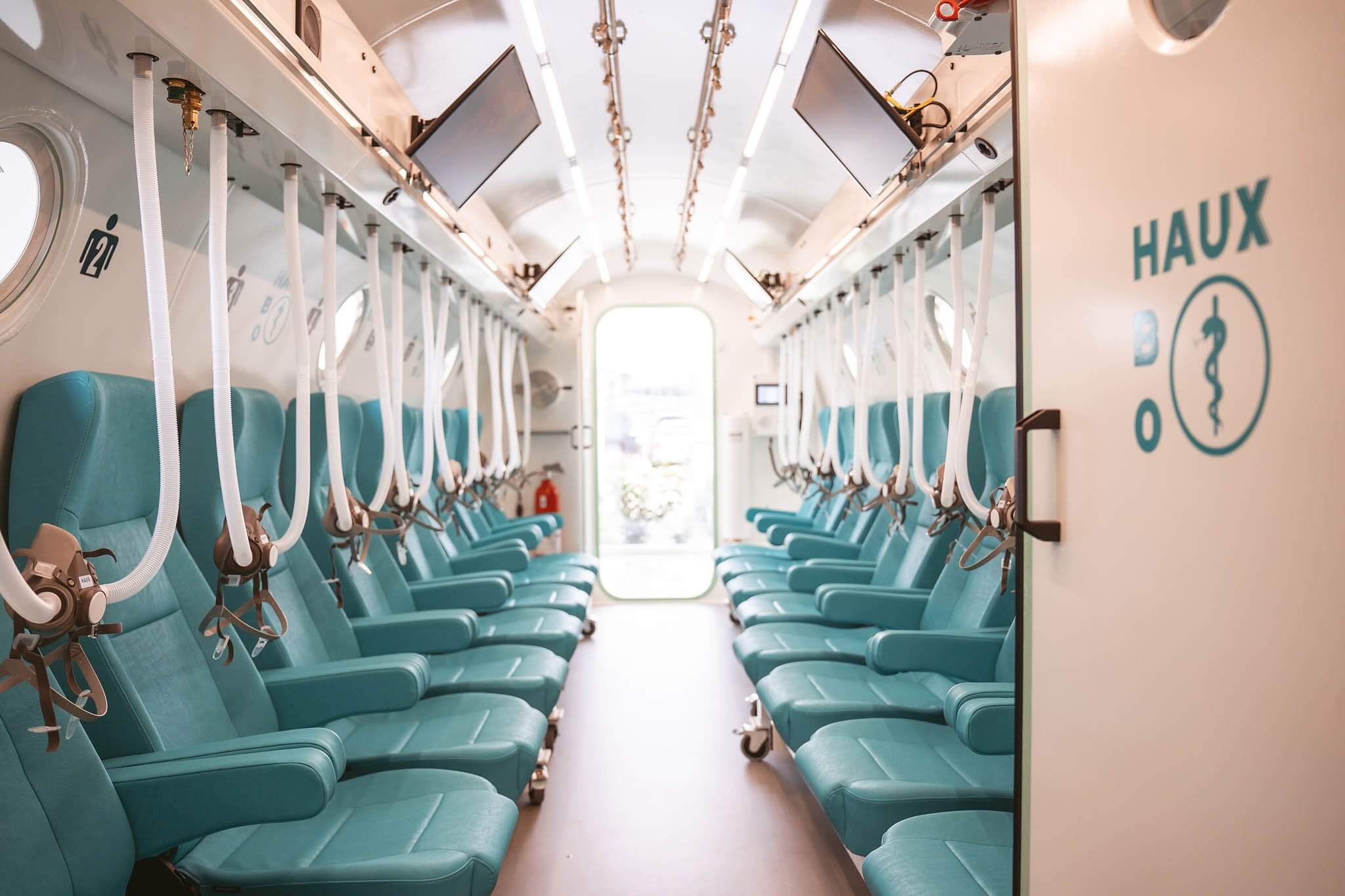
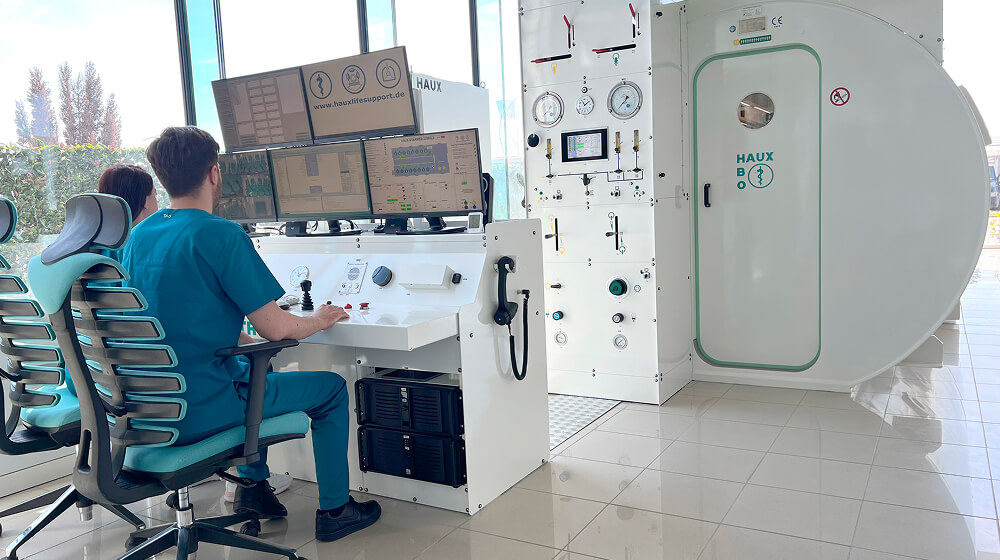
At Hyperbarium Clinic, treatment takes place in a next-generation multiplace hyperbaric chamber (16 seats) manufactured in Germany, the largest chamber of this type in Romania. The equipment is classified as a
class IIB medical device and can be pressurized up to 3 ATA. Each patient breathes 100% pure medical oxygen and is medically monitored throughout the entire session.
Before starting therapy, each patient undergoes a complete medical consultation. During this consultation, the patient’s general health condition is evaluated, possible contraindications are identified (for example, untreated pneumothorax temporarily excludes therapy), and a personalized protocol is established. Typically, the treatment involves one session per day on consecutive days from Monday to Saturday, but the total duration and exact frequency are determined exclusively after the initial medical consultation, depending on diagnosis, age, and comorbidities.
The medical team has specialized training in hyperbaric medicine and experience gained in hospitals in Romania, Germany, and the United Kingdom. During each session, patients are continuously supervised by medical staff, including from inside the chamber, an essential aspect especially for patients with complex cardiovascular or neurological conditions.
The hyperbaric chamber is also designed for the comfort of patients: it is spacious, air-conditioned, equipped with an audio-video system that allows watching movies or listening to music, ambient lighting and a permanent communication system with the medical team. Patients who are afraid of enclosed spaces usually find that a 16-seat multi-bed room is more like the interior of a spacious minibus or premium class train compartment, not a cramped capsule.
The clinic also provides access to additional medical consultations, including cardiology, neurology, infectious diseases, and rehabilitation medicine, allowing an integrated approach for complex cases.
From a logistical perspective, Oradea is easily accessible from Cluj, with a travel time of approximately two and a half hours. There are numerous accommodation options both in Oradea and in the Băile Felix resort, located about 10 minutes from the clinic, known for its hotel infrastructure and spa facilities.
Which conditions can benefit from recovery through hyperbaric therapy?
According to Dr. Patrichi, the scope of hyperbaric therapy is broad and includes both acute and chronic conditions from multiple medical specialties. Among the most common indications are cardiovascular diseases (peripheral ischemia, Buerger’s disease), neurological conditions (post-stroke sequelae, neuropathies, multiple sclerosis), traumatic or surgical injuries, burns, tissue necrosis and bone necrosis, radiation sickness, gas embolism, and severe infections.
The therapy is also used in diabetes complicated by ulcers or chronic wounds, carbon monoxide poisoning or cyanide poisoning, athlete recovery, and as an
adjuvant treatment in oncology after radiotherapy. Other indications include sudden hearing loss, ischemic retinopathies, septicemia, and frostbite.
The underlying mechanism in all these situations is the same: more oxygen available in tissues means more energy for regeneration, less inflammation, and an increased capacity of the body to defend itself and recover.
The inauguration of the hyperbaric chamber at the Recovery Hospital in Cluj is undoubtedly good news for patients in Transylvania. Until it becomes available and later reimbursed by CNAS, it is important for patients looking for a truly medical private option to know exactly what they are choosing. Not all equipment is the same, not all protocols are equal, and not all centers promoting oxygen therapy provide hyperbaric therapy in the true medical sense.
Frequently asked questions about hyperbaric therapy in Cluj
1. Is medical hyperbaric therapy available in Cluj-Napoca?
Currently, medical hyperbaric therapy (HBOT) is not available in private clinics in Cluj. The Clinical Recovery Hospital is preparing to open the hyperbaric therapy service, which will use an 8-seat multi-bed chamber.
2. How much does a hyperbaric therapy session cost in Cluj?
Sessions in wellness-type mild hyperbaric capsules (mHBOT) cost between 180 and 300 lei. Real medical hyperbaric therapy (HBOT) costs between 400 and 700 lei in Romania.
3. What is the difference between HBOT and mHBOT?
HBOT uses certified medical hyperbaric chambers, inside which the pressure can reach up to approximately 3 atmospheres absolute (3 ATA), which is approximately 2 bars above normal atmospheric pressure. Under these conditions, patients breathe 100% medical oxygen, and the procedure is used to treat specific conditions.
mHBOT uses mild, wellness-type hyperbaric capsules that operate at much lower pressures (approx. 1.3 ATA, i.e. approx. 0.3 bar above atmospheric pressure) and uses oxygen-enriched air, not pure medical oxygen, having a much reduced effect on tissue oxygenation.
Do you want to know if hyperbaric therapy is right for you? The first step is a consultation with a doctor specialized in hyperbaric medicine. At the Hyperbarium Oradea clinic, this consultation provides a
clear evaluation based on medical data, without exaggerated promises.
For appointments and additional information, you can contact Hyperbarium Oradea clinic at 0359 44 22 55.