



Article reviewed by: Dr. Sturz Ciprian, Dr. Tîlvescu Cătălin and Dr. Alina Vasile
Article updated on: 05-10-2026
Knee injections: what really works and what is overestimated?
- What knee injections are
- Hyaluronic acid injections for the knee, the oldest and most tested treatment
- PRP injections for the knee, why it can help, but not everyone
- Stem cell injections for the knee - the biggest promise, but also the biggest overestimation
- Corticosteroid injections: a rapid effect, but risky if you overuse them
- Gonarthrosis and choosing the right treatment, according to the stage
- What is truly overestimated and what can do more harm than good
- The best injections for the knee and how much a correct treatment costs
- Hyperbaric therapy: what role it can have in knee recovery
- The best knee injection starts from the correct diagnosis
Imagine the knee as a complex hinge, which has to carry several times the weight of the body with every step, every climb up the stairs, every time you get up from a chair. For years, this hinge works without you giving it any thought. Then, at some point, a twinge appears in the knee while you get out of bed in the morning, or a dull ache that no longer goes away after a longer walk. This is the moment when many people ask around what they can do. And most of the time they receive the recommendation to have injections. Most people consider this procedure a miraculous solution, which repairs the knee without surgery. On the other hand, there are also those who claim that injections are, in fact, a useless expense, without real results. The reality, however, is somewhere in between. And this article aims to help you understand why.
What knee injections are
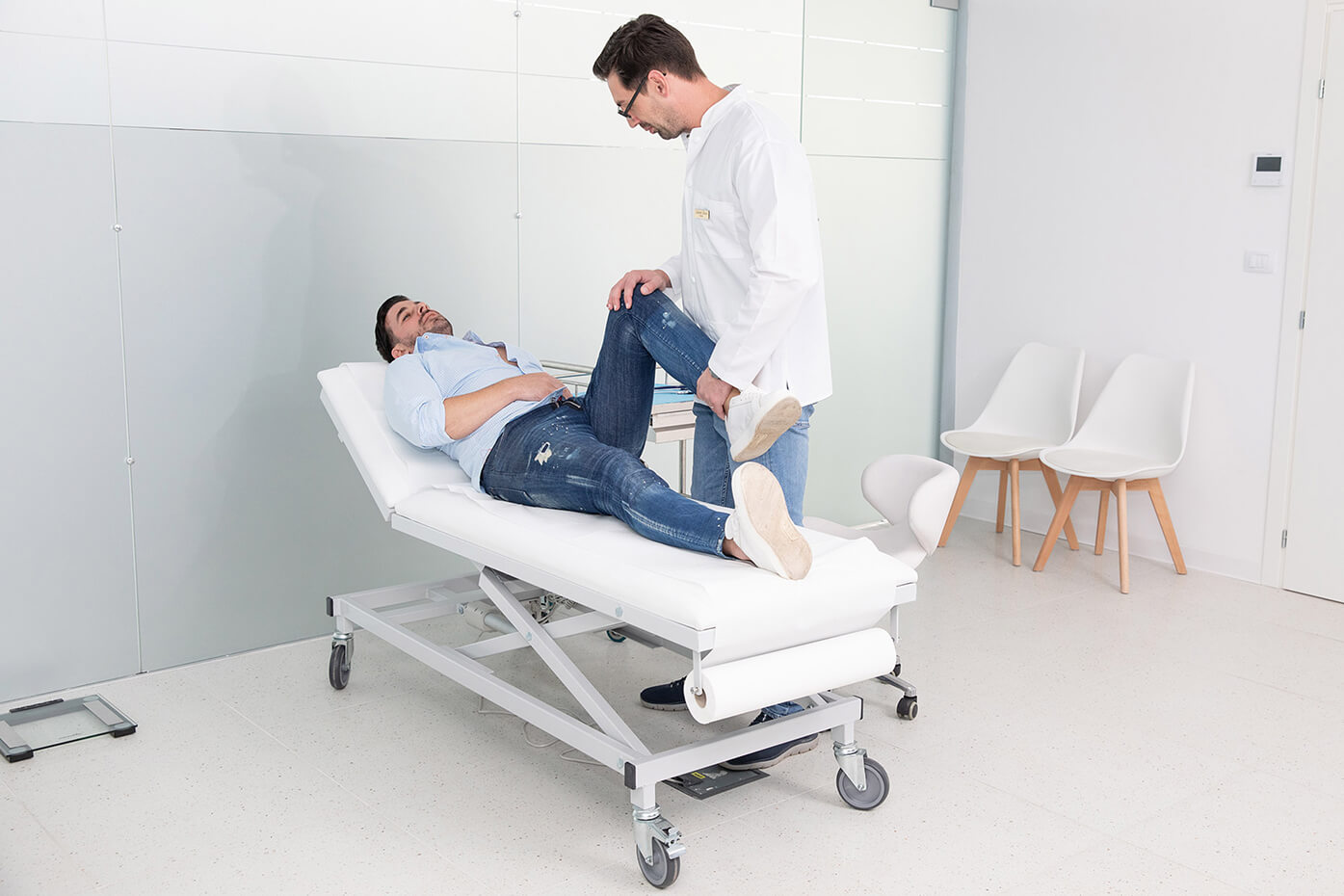
A knee injection is a medical procedure through which a doctor injects a therapeutic substance directly inside the joint, in the space called the articular cavity, so that the treatment acts exactly where the problem is. To better understand what knee injections mean, the simplest way is to think of the joint as a closed box, filled with a natural liquid, called synovial fluid, which has the role of lubricating the movement between the bones, exactly as oil lubricates a metal hinge. Through an injection, the substance reaches this box directly, without passing through the stomach, liver or the rest of the body, an important difference from an anti-inflammatory pill, which travels through the whole body before reaching, in a much smaller amount, the knee that hurts.
Why would someone need such a procedure? Usually because the basic treatments, physiotherapy, exercises to strengthen the muscles around the knee, weight loss, oral anti-inflammatory medicines, orthoses, no longer control the pain well enough. At the same time, the patient is not yet ready, in terms of age or general condition, for a joint replacement operation.
The most frequent reason for resorting to injections is gonarthrosis, that is, osteoarthritis of the knee. This is a disease in which the cartilage, that smooth and elastic layer that covers the ends of the bones and allows them to glide over each other without friction, wears out progressively, exactly as a shock-absorbing cushion used continuously wears out over time.
The scale of this problem is by no means small. Globally, osteoarthritis affects almost 595 million people, that is, 7.6% of the entire population of the planet, and the number of cases has increased by more than 130% compared to 1990, according to a comprehensive analysis published in The Lancet Rheumatology. Today, approximately 70% of patients affected by this disease are over 55 years old. The World Health Organization confirms that the disease becomes much more frequent with age and that it affects women more often than men. Approximately 70% of patients affected by this disease are over 55 years old. In other words, if you feel that your knee "is not what it used to be" around the age of 50-60, you are not an exception, you are part of a very well documented medical phenomenon.

Hyaluronic acid injections for the knee, the oldest and most tested treatment
Let us stay for a moment with the image of a rusty hinge. If the cartilage is the shock-absorbing cushion, hyaluronic acid is the oil that lubricates the mechanism. It is a substance that the body produces naturally, present in the synovial fluid, and which gives it that thick, gelatinous consistency, capable of absorbing shocks and reducing friction between the bones. The problem is that, with osteoarthritis, the amount and quality of hyaluronic acid in the knee decrease considerably, the joint becomes drier, and every step produces more friction, more inflammation and, ultimately, more pain.
The idea behind hyaluronic acid injections for the knee is to reintroduce, through a direct injection into the joint, a viscous solution similar to healthy synovial fluid, in order to replace what the body no longer produces by itself in a sufficient amount. It is probably the oldest and most studied type of injection for the knee, which is why we have a very large volume of research on this subject available.
It is important to know that international guidelines are not completely aligned regarding the routine use of hyaluronic acid. Some accept it as an option for selected patients, when exercises, weight control and other measures do not offer sufficient relief. Others consider that the average benefit over placebo may be too small to recommend the procedure to all patients. That is why hyaluronic acid should not be seen as a universal solution, but as an option that may make sense in certain cases, depending on the symptoms, the stage of the disease and the patient's goals.
A study entitled Efficacy and safety of repeated courses of hyaluronic acid injections for knee osteoarthritis, published in 2018, followed patients who received repeated courses of intra-articular hyaluronic acid over a longer period and observed a pain reduction of approximately 55% compared to the initial level, with a benefit that was maintained or even amplified from one course to another, without additional safety problems appearing. For the patient, the result suggests that hyaluronic acid injection should not necessarily be seen as a single isolated attempt. In the studies analysed, repeated courses were generally well tolerated, and pain relief was maintained or increased in some groups of patients. However, repeating the injection must be decided individually, based on the response to the previous treatment, the degree of osteoarthritis, other associated diseases and the doctor's recommendation.
A more recent review, Advances in hyaluronic acid therapy for knee osteoarthritis, published in 2026, confirms that hyaluronic acid injections produce a statistically significant relief of pain compared to a placebo injection, especially when formulations with large, more viscous molecules are used. Another study, One shot of hyaluronic acid in advanced knee osteoarthritis, carried out on patients with already advanced osteoarthritis, showed that a single injection of hyaluronic acid reduced pain by more than 51% and improved joint function by almost 45%, six months after administration. In practice, this result tells you that even patients with advanced osteoarthritis, who might think it is too late for this type of treatment, should not automatically rule it out of the discussion with their doctor.
Not all conclusions are equally optimistic, however, and it is important to say this honestly, not only the beautiful side of the story. The systematic review The effectiveness of hyaluronic acid intra-articular injections in the treatment of osteoarthritis of the knee shows that the effect of hyaluronic acid in mild and moderate osteoarthritis is modest in magnitude, with the maximum benefit felt at 6-8 weeks after injection and with an uncertain effect when we look 6 months ahead. For you, this means that you should not be disappointed if the result is not spectacular. It is important to know from the start what level of improvement you can realistically expect, so that you do not make hasty decisions, such as abandoning the treatment too quickly or, on the contrary, expecting a complete cure. In practice, this is also where we find the answer to a question that many patients ask in the consulting room: how long does the effect of hyaluronic acid last in the knee? For most people, the relief is clearly felt in the first month and a half, then it begins to fade gradually, which is why some medical protocols recommend repeating the injection after a few months, in order to maintain the benefit over a longer term, according to the study The Booster Effect of a Single Quarterly Dose of Hyaluronic Acid. This detail about the duration of the effect is essential in planning the budget and scheduling visits to the doctor, because it shows you that most likely it will not be a single injection, but a treatment plan over a longer term.
It is worth adding a technical, but useful detail: not all hyaluronic acid products are the same. If you ask which hyaluronic acid for knee injections is more effective, some analyses suggest that high or ultra-high molecular weight formulations may offer, for certain categories of patients, a longer-lasting or more visible relief. However, the differences between products are not clear enough to say that there is a "best" formulation for every knee. The choice must be made according to the diagnosis, the symptoms, the stage of osteoarthritis and the doctor's recommendation.
PRP injections for the knee, why it can help, but not everyone
If hyaluronic acid can be compared, metaphorically, with a lubricant for the joint, platelet-rich plasma is rather a team of biological signals sent by the body itself to the affected area. PRP knee injections use platelet-rich plasma, obtained from the patient's own blood. A small amount of blood is collected, as in a routine test, then it is centrifuged. Through centrifugation, the platelets are concentrated and separated from the other components of the blood.
Platelets are not important only for coagulation. They contain growth factors, that is, substances involved in repairing tissues and controlling inflammation. Being the patient's own blood, the risk of allergic reaction or rejection is very small.
What is surprising is that the evidence for PRP is more solid than the sceptical discourse sometimes found on the internet suggests. The meta-analysis PRP Injections for the Treatment of Knee Osteoarthritis, published in 2025, shows that PRP can improve knee function at 1, 3, 6 and 12 months after administration. The study also reported a significant reduction of pain compared to placebo, especially at three and six months after treatment.
For the patient, the maintenance of a benefit for up to one year is important information. It suggests that PRP can be more than an intervention with a very short effect. However, the conclusion that PRP certainly stops the progression of gonarthrosis or that it works identically for all patients must be avoided.
A randomised and double-blind study, Intra-articular Injection of Platelet-Rich Plasma Is Superior to Hyaluronic Acid or Saline Solution, directly compared PRP, hyaluronic acid and saline solution. In a double-blind study, neither the patient nor the doctor evaluating the result knows who received the active treatment and who received the placebo. This reduces the risk that the patient's or the doctor's expectations will influence the conclusion.
In that study, only the patients treated with PRP maintained a significant improvement in knee function at 12 months. The WOMAC score, used to assess pain and movement difficulties in osteoarthritis, increased by 21%, and the IKDC score, used for knee function, increased by 40%. For the patient, these results are useful because they show that sometimes the difference from hyaluronic acid can be observed not only in pain, but also in everyday activities: walking, climbing stairs, getting up from a chair or returning to physical activity.
However, PRP does not have unanimous results. A large study, published in JAMA and entitled Effect of Intra-articular Platelet-Rich Plasma vs Placebo Injection on Pain and Medial Tibial Cartilage Volume, included 288 adults with mild to moderate osteoarthritis. The conclusion was different: PRP did not produce a significant improvement in pain or in the progression of the disease compared to a placebo injection with saline solution.
This result is important precisely because it comes from a large study, published in a highly respected medical journal. It shows that PRP must not be presented as a guarantee. The differences between studies do not appear because doctors "cannot make up their mind", but because PRP is not a single standardised product. The platelet concentration, the way the blood is processed, the presence of leukocytes and the number of injections can vary significantly from one clinic to another.
The review Platelet-Rich Plasma for Knee Osteoarthritis and the guidelines of the Osteoarthritis Research Society International, OARSI, underline this lack of standardisation and classify the effectiveness of PRP as uncertain. In practice, for the patient, the result may depend not only on their diagnosis, but also on the exact protocol used by the chosen clinic.
If you ask which is the best injection for knee injections when it comes to PRP, the answer does not only lie in the name of the treatment. What matters is the platelet concentration obtained and the presence or absence of leukocytes, that is, the white blood cells. Some studies suggest that PRP preparations with fewer leukocytes, called "leucocyte-poor", may be better tolerated and may cause fewer local inflammatory reactions after injection. However, there is still no universally accepted protocol for the platelet concentration, the number of injections or the ideal type of PRP. That is why PRP must be recommended prudently, as an individualised option, not as a guaranteed treatment for gonarthrosis.
Before choosing a PRP injection, it makes sense to ask the clinic what protocol it uses, what type of PRP it prepares and why it recommends it in your case. A clear answer to these questions is more valuable than a general promise that "PRP works".
Stem cell injections for the knee - the biggest promise, but also the biggest overestimation
Stem cell injections for the knee usually use cells harvested from the patient's bone marrow or adipose tissue, then processed and injected into the joint. In theory, they can contribute to controlling inflammation and repairing tissues. In practice, the preparations differ greatly between clinics, and their mechanisms are not yet sufficiently well standardised.
Indeed, few treatments have attracted so much enthusiasm, and so many exaggerated promises, as stem cell injections for the knee. The idea sounds almost science fiction: cells capable of transforming into cartilage cells and regenerating a joint worn out by years of use. This process is, for the time being, theoretical. It is exactly the kind of story that sells well in an advertisement, which is why it circulates so widely on the internet as a revolutionary solution. But, when you look at the real clinical evidence, the picture changes considerably.
The Cochrane review What are the benefits and risks of stem cell injections for knee osteoarthritis?, updated in 2025, shows that these injections can bring a slight improvement in pain and function compared to placebo. However, the authors clearly state that there is uncertainty regarding the improvement of quality of life and that the evidence on long-term safety is insufficient.
For the patient, the message is simple: a possible benefit is not the same thing as a promise of cartilage regeneration. Especially when the treatment is expensive, the lack of solid long-term data must be discussed before making a decision.
A relevant detail appears in the study Contextual effects of mesenchymal stem cell injections for knee osteoarthritis. The authors analysed how much of the improvement reported by patients is explained by the biological effect of the treatment and how much by contextual factors, including the patient's positive expectations. Approximately 60-63% of the improvement observed at six months and 50-66% of that observed at 12 months was attributed to these contextual effects.
In other words, a large part of the perceived result may come from the placebo effect, from the medical attention received and from the hope invested in a procedure presented as innovative. This does not mean that the patient's symptoms are not real. It means that the treatment itself cannot automatically be credited with the entire improvement.
The OARSI guidelines for the non-surgical management of knee, hip, and polyarticular osteoarthritis recommend against the routine use of stem cell therapy for knee osteoarthritis. The reason is the low quality of the evidence and the lack of standardisation of the products used. The World Health Organization also notes that there is insufficient evidence to support stem cell therapy in osteoarthritis.
If we were to name an overestimated intervention at this moment, stem cells would be near the top of the list. They are promising as a field of research, but they are not yet a proven treatment that "regenerates" cartilage and surely avoids a knee replacement.

Corticosteroid injections: a rapid effect, but risky if you overuse them
Corticosteroids (popularly called "cortisone") have long been the first injectable treatment option to which doctors resort when the knee becomes acutely inflamed, either in a flare-up of osteoarthritis, or in an associated bursitis or tendinitis. Their benefit is almost immediate. Within a few days, the inflammation and pain visibly subside, which makes them extremely tempting for patients who want a quick solution. The problem arises when these injections become part of the patient's routine, as the solution every time pain appears, without a comprehensive analysis of the patient's health situation by the doctor.
Cortisone can be used in an inflammatory flare of gonarthrosis, in bursitis or in some associated tendinitis. For a patient who cannot sleep because of the pain or who cannot resume their basic activities, the rapid reduction of inflammation can be important. The problem arises when the injection is repeated frequently, without re-evaluation, just to relieve the pain every time it returns.
The study Longitudinal MRI-defined Cartilage Loss and Radiographic Progression Following Intra-articular Corticosteroid Injection followed patients who received intra-articular corticosteroids and showed a risk of structural cartilage deterioration almost twice as high compared to patients who did not receive this treatment. The risk ratio was 2 to 1. Being an observational study, the result does not prove by itself that the injection is the direct cause of the deterioration, but it supports prudence regarding repeated, frequent use without careful medical re-evaluation.
This is the concrete answer to the question of what the risk after knee injections is when we talk about cortisone used repeatedly. The main risk is not only a local reaction after the injection, but the acceleration over time of the loss of cartilage. This process has already been set in motion by osteoarthritis.
That is why a cortisone injection must be seen as a short-term control tool, not as a permanent treatment plan. When it is indicated, it can help. When it becomes a routine, it can end up doing more harm than good, especially in young or active patients, who need to protect their joint in the long term.
Gonarthrosis and choosing the right treatment, according to the stage
When it comes to knee injections for gonarthrosis, there is no single treatment suitable for everyone. A patient with early osteoarthritis, who has pain only after exertion, does not have the same needs as a person who can no longer go down the stairs without holding on to the handrail.
In mild or moderate forms, hyaluronic acid can be a suitable choice if the goal is to reduce pain and maintain mobility. PRP can be considered especially in active, correctly selected patients, when the treatment is prepared according to a rigorous protocol. Cortisone can be useful in inflammatory flares, but it must not be used repeatedly as a permanent solution.
In advanced forms, injections can only offer temporary relief. If the joint space is very reduced, the knee is deformed, the pain appears daily or wakes you up at night, and simple activities have become difficult to perform, an injection cannot restore the joint. At this stage, a joint replacement operation may become the solution that offers the best chance of regaining mobility.
Many patients ask which injections are the most effective for the knee. The correct answer is not the name of a product, but the choice suitable for the context. The best injections for the knee are those recommended after a clear diagnosis, an up-to-date X-ray and an honest discussion about what can realistically be achieved.
An injection performed without sufficient investigations can mask a different problem: a meniscus tear, a ligament rupture, a stress fracture, an inflammatory arthritis or another cause of pain. That is why, before the procedure, the doctor must know exactly what they are treating.
What is truly overestimated and what can do more harm than good
It is time to call things by their name, exactly as any patient should hear them from their attending physician, not only from nicely packaged online advertisements. The first thing that must be said clearly: not every injection promoted as revolutionary has a scientific foundation proportional to the price asked for it. Stem cell therapy, even if it has a biologically plausible mechanism on paper, is currently overestimated in relation to the real clinical evidence, and the overwhelming part of the benefit perceived by patients is explained, as we have seen above, by the placebo effect, not by the actual regeneration of cartilage.
Corticosteroid injections, repeated frequently and without a therapeutic strategy, are another example of a treatment that can become problematic. They can reduce pain quickly, but they can contribute to the deterioration of cartilage when used excessively.
PRP also deserves to be viewed with discernment. The results vary enormously depending on the laboratory or clinic where the plasma is prepared, on the platelet concentration obtained and on the presence or absence of leukocytes, which is why a cheap PRP treatment, without a clear and verifiable preparation protocol, may have real chances of producing no measurable benefit, no matter how convincing the promise sounds.
In addition, an injection should not be performed without a diagnosis. A recent X-ray or, when needed, a magnetic resonance imaging scan can show whether the pain really comes from gonarthrosis, from a meniscus tear, from a ligament injury, from an inflammatory problem or from another cause. An injection performed "by guesswork" can mask the symptoms of a problem that needs a completely different treatment.
The best injections for the knee and how much a correct treatment costs
When you look for information about the price of knee injections, you will notice large differences between clinics and between the types of treatment. Cortisone is usually the most affordable option. Hyaluronic acid has an intermediate cost, influenced by the formulation used and the number of injections. PRP is more expensive because it involves the collection and processing of blood. Stem cells can have very high costs.
The price, however, must not be the only criterion. A cheap procedure, often performed without a clear plan, can end up being more expensive over time. Likewise, an expensive procedure, promoted as innovative, does not automatically become effective just because it has a high price.
It is important to ask what substance will be used, what type of product it is, how many sessions are recommended, what results are realistic, what the risks are and what happens if the injection does not work. A good medical plan also includes the backup option, not only the promise of the first procedure.

Hyperbaric therapy: what role it can have in knee recovery
Beyond injections, knee recovery depends on the control of inflammation, progressive mobilisation, physiotherapy, nutrition, sleep and the supply of oxygen to the tissues. This is where hyperbaric therapy for the knee can have a complementary role.
Inflamed or recently operated tissues need oxygen for the repair processes. Normally, oxygen is transported by haemoglobin, the component of blood that gives it its red colour. In hyperbaric therapy, the patient breathes pure oxygen inside a pressurised chamber. The increased pressure allows a larger amount of oxygen to dissolve directly in the plasma, the liquid part of the blood. Thus, oxygen can reach more efficiently the tissues that need support for healing.
However, it must be taken into account that a series of hyperbaric therapy sessions for the knee will not repair the cartilage. In reality, hyperbaric therapy has a recovery role and cannot be replaced by surgery and other treatments applied locally. However, it can support the control of inflammation and the healing process in selected contexts, especially after surgical interventions.
The study Effect of hyperbaric oxygen therapy on postoperative recovery after total knee arthroplasty analysed the role of hyperbaric therapy after knee surgery, especially after total knee arthroplasty, that is, the complete replacement of the joint. The researchers reported a reduction in muscle injuries three days after the operation, a faster recovery of quadriceps strength and a decrease in oedema in the operated limb. In other words, for a patient who has just gone through an operation, these results can mean a more comfortable recovery in the immediate period: less swelling, muscles that regain their strength more quickly and a faster return to normal walking, alongside physiotherapy.
Sports recovery, however, raises a slightly different issue. For an athlete or for an active person, the goal is not only for the pain to disappear, but to return safely to running, changes of direction, jumping or training. After a knee sprain, a medial collateral ligament injury, a muscle injury or an arthroscopy, hyperbaric oxygen for knee recovery can be discussed as an adjunctive method, alongside the orthopaedic assessment and a progressive physiotherapy plan.
There are data suggesting that the therapy can reduce pain and can speed up the return to sporting activity in certain soft tissue injuries. For example, the study Effects of hyperbaric oxygen therapy on recovery acceleration in athletes with grade 2 medial collateral ligament injury observed a faster return to sport and a reduction of pain in athletes with a grade II injury of the medial collateral ligament. The result is promising especially for athletes who need to regain the stability of their knee before returning to exertion, but the study was not randomised, which means that it cannot be turned into a promise valid for every injury.
A more recent analysis of hyperbaric oxygen therapy for high performance athletes reaches a similar conclusion: there are limited data suggesting a reduction of pain and a faster return to sport after certain musculoskeletal soft tissue injuries, but studies in humans remain inconclusive overall. For an active patient, this is useful information: the therapy can make sense as support in recovering from a real injury, not as a standard procedure after every training session or competition.
Hyperbaric oxygen therapy for knee recovery is, therefore, an intervention that can support the body in a vulnerable period, after surgery or after a correctly selected injury. However, the results must be viewed realistically, especially in the case of gonarthrosis. Hyperbaric therapy does not replace the operation, medical rehabilitation, the recommended exercises or the treatments for the underlying cause of the pain.
Thus, hyperbaric therapy must be included in a coordinated plan, established together with the attending physician. For people recovering from joint replacement, arthroscopy, ligament reconstruction or other interventions on the knee, it can represent additional support, depending on the medical indication, the general state of health and the recovery goal.
At Hyperbarium, the decision to include hyperbaric oxygen therapy in such a plan can be analysed within a multidisciplinary team of doctors. This means that the problem is not viewed in isolation, only through the lens of knee pain or of a single procedure, but in the complete context of the patient: the orthopaedic diagnosis, the intervention performed, the evolution of the wound or of the tissues, the level of inflammation, the current mobility and the stages of recovery. Through the collaboration between specialists, the therapeutic plan can be adapted more realistically, so that hyperbaric therapy is used only when it has an appropriate indication and complements, rather than replaces, the orthopaedist's recommendations, physiotherapy and medical rehabilitation.
The best knee injection starts from the correct diagnosis
Knee pain does not have a single cause and, precisely for this reason, there is no single injection suitable for everyone. Hyaluronic acid can help when the joint needs extra lubrication and shock absorption. PRP can be an option for certain people, especially when it is prepared according to a clear protocol and recommended after a careful evaluation. Cortisone can quickly reduce inflammation, but it should not become the automatically repeated solution every time the pain returns. And stem cell injections remain, for the time being, closer to a medical promise under research than to a treatment that can regenerate cartilage in a predictable way.
The most important thing to remember is that injections do not, by themselves, repair a knee affected by gonarthrosis. They can reduce pain, can make movement easier and can create a useful window for physiotherapy, for strengthening the muscles and for the gradual return to everyday activities. But their results depend on the correct diagnosis, on the stage of osteoarthritis, on the type of substance injected and on the way the procedure is integrated into a broader recovery plan.
Before choosing a procedure, it is worth asking a few simple questions: what exactly is causing the pain? Is it gonarthrosis, a meniscus tear, an inflammation of the tendon, a bursitis or a ligament problem? What result is realistic in my case: less pain, easier walking, postponing the operation or returning to sporting activity? And what do I do next if the injection does not have the expected effect?
A well-argued medical answer to these questions is worth more than the promise of a revolutionary procedure. In certain situations, recovery can also include complementary methods, such as hyperbaric oxygen therapy, especially after operations or correctly selected injuries. This does not replace injections, physiotherapy or orthopaedic intervention when they are necessary, but it can support tissue healing and the control of inflammation as part of a coordinated plan.
At Hyperbarium, such a plan can be analysed by a multidisciplinary team of doctors, so that the choice of treatment takes into account not only the current pain, but also the orthopaedic diagnosis, mobility, the medical history and the real recovery goals. Sometimes, the best decision is not the newest or the most expensive procedure, but the one that offers you the real chance of moving better, more safely and with less pain in the long term.