

Article reviewed by: Dr. Sturz Ciprian, Dr. Tîlvescu Cătălin and Dr. Alina Vasile
Article updated on: 05-10-2026
Chronic osteomyelitis: when the bone infection does not respond to antibiotics and surgery
- What osteomyelitis is and why it is so hard to cure for good
- The symptoms of chronic osteomyelitis and how they differ from the acute form
- Forms of osteomyelitis relevant in chronic osteomyelitis
- How chronic osteomyelitis is diagnosed
- Why antibiotics and surgery sometimes fail
- How effective is hyperbaric oxygen therapy in chronic osteomyelitis
- How hyperbaric oxygen therapy acts on the infected bone
- Is natural treatment a solution for chronic osteomyelitis?
- Chronic osteomyelitis requires a treatment plan built for each patient
When an infection takes hold inside the bone, the body fights on difficult ground. Bone receives far less blood than muscle or skin, and this means that neither antibiotics nor the cells of the immune system easily reach where they are needed. In most patients, a correct course of antibiotics, possibly followed by a surgical procedure to clean out the infected tissue, solves the problem for good. There is, however, a group of patients in whom the infection returns, month after month, year after year, despite correctly administered treatments. This article explains what happens in these cases, why standard treatments sometimes fail and in which situations hyperbaric oxygen therapy can be introduced as adjunctive treatment, alongside antibiotic therapy and surgery, not in place of them.
What osteomyelitis is and why it is so hard to cure for good
To understand what osteomyelitis is, one must start from the structure of the bone itself. Osteomyelitis is an infection of the bone and bone marrow, most frequently caused by the bacterium Staphylococcus aureus, but also by other germs, including mycobacteria or, more rarely, fungi. Unlike soft tissue infections, where blood circulates abundantly and carries both immune cells and antibiotics directly to the site of infection, bone is relatively poor in blood vessels. This anatomical particularity explains why, even in the era of modern antibiotics, osteomyelitis remains a disease that is difficult to cure definitively in a proportion of patients.
The infection can reach the bone through three main routes:
- The bloodborne route, the most frequent in children, in which bacteria travel through the blood from another infectious focus and settle in a well-vascularised bony area, usually near a joint.
- Infection by contiguity, predominant in adults, meaning the direct spread of an infection from a wound, an open fracture, a joint prosthesis or a surgical procedure.
- Vascular insufficiency, a situation frequently encountered in people with diabetes mellitus, in whom the deficient circulation of the foot allows a simple superficial wound to progress towards a deep bone infection.
When the infection lasts or reappears despite correctly administered treatment, doctors speak of refractory osteomyelitis, defined as a chronic form of the disease that does not respond to standard treatment or recurs after it, according to a clinical analysis published by the National Center for Biotechnology Information. The same source shows that bone infections located in the spine, skull or sternum carry a higher risk of severe complications, which is why they require careful medical follow-up and, sometimes, additional treatments.
In terms of duration, chronic osteomyelitis is, as a rule, defined as a bone infection that persists for more than four to six weeks or that reappears after an apparently successful treatment. The difference from the acute form lies not only in time, but also in the way the body reacts: in time, around the infected area, fragments of dead bone, deprived of blood supply, called bone sequestra, can form. These fragments become, in practice, a refuge for bacteria, inaccessible to antibiotics administered orally or intravenously, no matter how well the antibiotic in question is chosen.
The symptoms of chronic osteomyelitis and how they differ from the acute form
The symptoms of chronic osteomyelitis are often more discreet than those of the acute form, which makes the diagnosis more difficult and sometimes delays, by months, the moment when the patient reaches a specialist. In the acute phase, the infection announces itself loudly, with fever, chills, intense and localised pain, redness and local warmth, as well as an altered general condition. In contrast, in the chronic form, the pain can be dull, intermittent, worsened by exertion and partially relieved by rest, and fever is frequently absent or very subtle. According to a clinical description published by StatPearls, NCBI, oedema, pain and local redness remain present in the chronic form as well, but fever becomes a much rarer sign, which means the disease is sometimes mistaken for a minor rheumatological or orthopaedic condition.
A characteristic sign of chronic osteomyelitis, encountered especially when the disease has been evolving for a long time, is the appearance of a fistula, that is, a tract that connects the infected area inside the bone to the surface of the skin, through which purulent discharge drains intermittently. This tract can close temporarily, giving the false impression of healing, only for the infection to reappear after weeks or months in exactly the same place. In terms of bone changes, the disease has three defining elements, described at length in an imaging review published by the National Institutes of Health: the sequestrum, a fragment of dead bone, completely separated from the living bone because of the interruption of the local blood circulation; the involucrum, a layer of new bone formed by the body around the sequestrum, as a defensive reaction meant to isolate the infected area; and the cloaca, an opening in this protective layer through which pus and fragments of dead bone drain towards the soft tissues and, finally, towards the skin, forming the fistula visible from the outside.
Other manifestations include persistent swelling of the affected area, bone tenderness on palpation, general fatigue and, in older cases, deformities of the bone or limited movement in the neighbouring joint. For the correct staging of the disease, most orthopaedic centres use the Cierny-Mader classification, a system that takes into account both the extent of the infection inside the bone and the patient’s general state of health, as described in the study published in the Chang Gung Medical Journal on osteomyelitis of the tibia. Anatomically, this classification, detailed in an analysis published by the National Institutes of Health, divides the disease into four stages: stage 1, in which the infection remains limited to the inside of the medullary canal of the bone; stage 2, in which only the surface of the cortical bone is affected, usually following a direct wound; stage 3, in which both the cortical and the medullary bone are involved, but the bone remains structurally stable; and stage 4, the most severe form, in which the infection involves the entire thickness of the bone, and the bone loses its mechanical stability, as happens in the case of an infected nonunion. To this anatomical stage is added a physiological class of the patient, graded from A to C, which takes into account the general capacity of the body to heal, information essential for choosing the most suitable treatment strategy, including the opportunity of introducing hyperbaric therapy as adjunctive treatment.
Forms of osteomyelitis relevant in chronic osteomyelitis
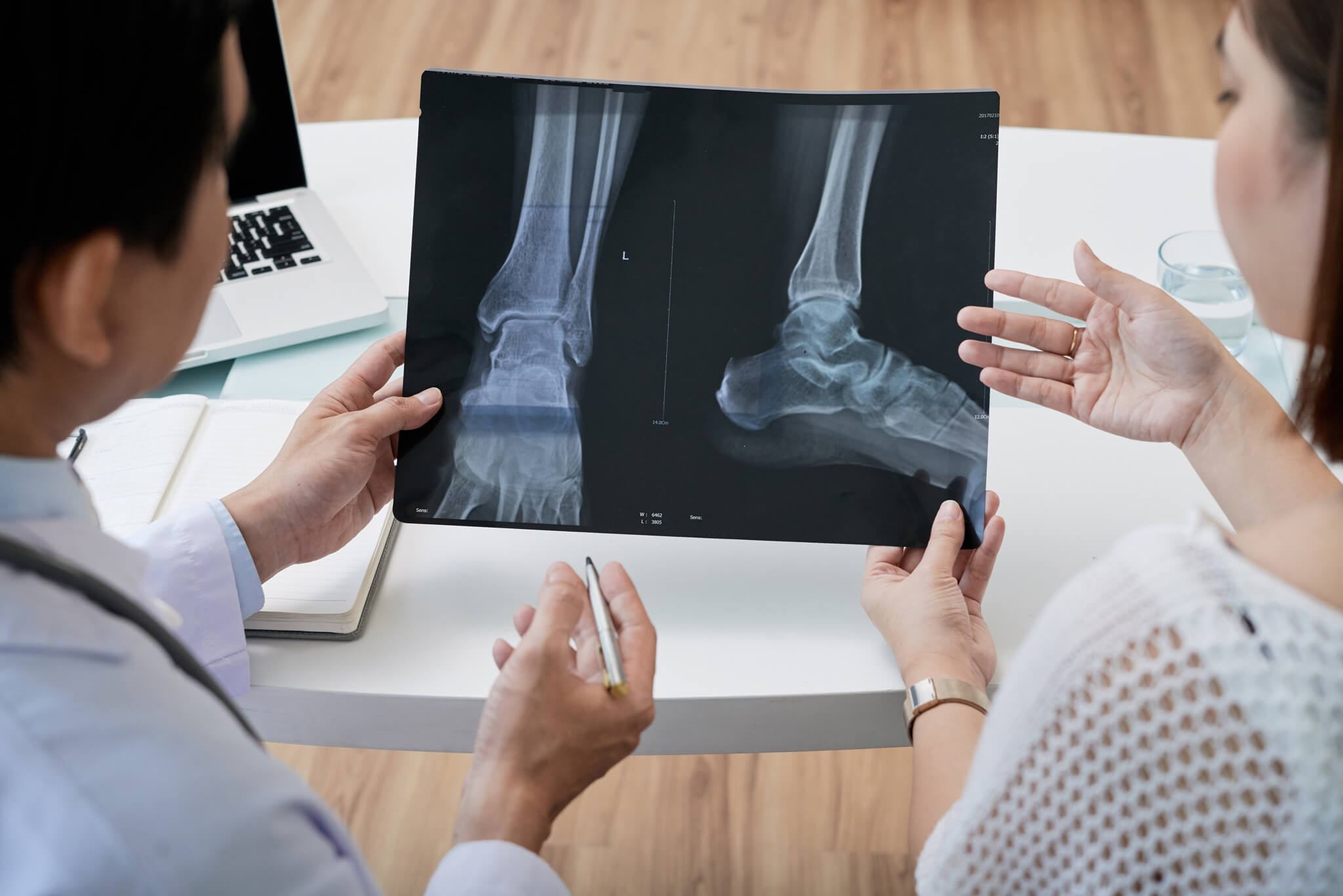
Osteomyelitis can appear in different ways, depending on how the infection reaches the bone, the area affected and the general state of health of the patient. For people with chronic osteomyelitis, the most important forms are those that appear after traumas, surgical procedures, persistent wounds or circulation problems, because these carry a higher risk of recurrence and may require a complex treatment plan.
Haematogenous osteomyelitis appears when bacteria reach the bone through the blood, having set out from another focus of infection in the body. It is more frequent in children, where it usually affects the long bones, near the joints. In adults it can appear, among other sites, in the spine, especially in people with diabetes, low immunity or other health problems that favour infections.
Osteomyelitis by contiguity appears when the infection spreads directly to the bone from the nearby tissues. It can appear after an open fracture, a deep wound, a trauma, an orthopaedic operation or near a prosthesis or a metal implant. This form is particularly important in chronic osteomyelitis, because the bacteria can attach to the surface of the implants and can form biofilm, a protective film that makes them harder to eliminate with antibiotics.
Osteomyelitis associated with vascular insufficiency appears mainly in people with diabetes mellitus and deficient circulation at the level of the feet. A wound or an ulcer that does not heal can become infected, and the infection can gradually extend up to the bone. Treatment involves the control of the infection, the correct care of the wound, the evaluation of the circulation and surgery when it is necessary. Hyperbaric oxygen therapy can be considered as adjunctive treatment after an individual evaluation, without replacing the antibiotics, the wound care or the procedures for restoring the circulation when these are indicated. The IWGDF/IDSA guidelines specify that hyperbaric oxygen is not recommended as the sole treatment for the infection in the diabetic foot; the decision depends on the complete medical context of the patient.
Osteomyelitis associated with implants can appear around the plates, rods, screws or prostheses used after fractures and orthopaedic procedures. The bacteria can attach to the metal and can form biofilm, which explains why the infection can persist even after repeated courses of antibiotics. The decision to keep or to remove the osteosynthesis material depends on the stability of the bone, the degree of consolidation of the fracture, the bacterium identified and the general condition of the patient.
Vertebral osteomyelitis affects one or more vertebrae and, sometimes, the disc between them. The main symptom is persistent back pain, which does not improve as would be expected. Fever can be absent, especially at the beginning. Numbness, muscle weakness, difficulties in walking or changes in urinary and bowel control require prompt presentation to the doctor, because they can indicate damage to the nerve structures nearby.
Maxillary osteomyelitis affects the upper jaw or the mandible and frequently has a dental cause. A deep cavity, an infection at the root of the tooth, an impacted tooth or a complication that appeared after extraction can allow bacteria to reach the bone. The signs can include pain, swelling of the gum or of the cheek, abnormal mobility of the teeth, an unpleasant taste in the mouth, purulent discharge or numbness at the level of the lower lip. Treatment involves the elimination of the dental source, antibiotics established after the medical evaluation and surgery when the infected focus requires cleaning.
Garré chronic osteomyelitis, also called Garré sclerosing osteomyelitis, is a rare form in which the thickening and the hardening of the bone predominate, through the formation of new bone around the inflamed area. It appears mainly in the mandible, although it can affect other bones as well, especially in children and young adults. The bone can become visibly thicker or more prominent, and the image on the X-ray can sometimes resemble that of a tumour-like formation. For this reason, the diagnosis is established through clinical evaluation, imaging and, when necessary, through the collection of samples. A case report published in PubMed Central shows that this form can become difficult to treat when there is affected and poorly vascularised bone tissue. The control of the source of infection, targeted antibiotics and the surgical removal of the dead bone tissue remain the basic elements of the treatment.
There are also rarer forms, such as chronic recurrent multifocal osteomyelitis and tuberculous osteomyelitis, which have different mechanisms and treatments. Chronic recurrent multifocal osteomyelitis is an autoinflammatory disease, not a bacterial infection; for this reason, antibiotics and hyperbaric therapy are not its basic treatments. Tuberculous osteomyelitis is caused by the bacterium of tuberculosis, evolves slowly and can affect, among other sites, the spine.
Regardless of the type of osteomyelitis, the correct diagnosis of the form of the disease and the identification of the bacterium involved, when it is a bacterial infection, guide the treatment. In refractory chronic osteomyelitis, the approach remains multidisciplinary: surgery for the removal of the infected or dead tissue, antibiotics chosen after cultures and, in selected cases, hyperbaric oxygen therapy as support for healing.
How chronic osteomyelitis is diagnosed
To confirm chronic osteomyelitis, doctors do not rely on a single test, but combine several investigations, because none of them, taken separately, offers a certain answer. Here are the main methods used and what each of them shows:
- Blood tests: in particular the erythrocyte sedimentation rate (a simple test that shows how quickly the red blood cells settle in a tube; the faster they settle, the more likely it is that there is inflammation in the body) and C-reactive protein (a substance produced by the liver when the body is fighting an inflammation or an infection). These tests show only that there is inflammation in the body, not where it is located or what is causing it, because they can also be raised in other diseases, from a simple cold to rheumatological conditions. That is why they are a first alarm signal, not a diagnosis in themselves.
- Magnetic resonance imaging (MRI): the most reliable investigation for seeing exactly where the infection is located in the bone and how far it has spread. A Norwegian study published in BMC Pediatrics compared these methods and showed a clear difference: the blood test (the sedimentation rate) identified the disease correctly in only 26% of the cases, while the MRI was correct in 85% of the cases. In other words, if the blood tests give an alarm signal, it is the MRI that actually confirms or rules out the disease.
- Conventional X-ray: useful especially when the disease is already long-standing, because it can show the areas of thickened bone or the fragments of dead bone (called bone sequestra).
- Computed tomography (CT): an investigation more detailed than the X-ray, used when the surgeon needs a precise image of the bone before the operation.
- Bone biopsy: the collection of a small sample directly from the bone, either during an operation or through a puncture. It is the only method that offers a certain diagnosis, because it allows the exact identification of the bacterium responsible and its testing, in the laboratory, to see which antibiotic it responds best to.
This last step matters enormously for healing. If the doctor chooses an antibiotic at random, without knowing exactly which bacterium caused the infection, the treatment can fail, and the disease risks becoming chronic and hard to cure, exactly the type of situation for which hyperbaric therapy is later taken into consideration as additional support.
Why antibiotics and surgery sometimes fail
The question that most patients who reach this point ask themselves is simple: if I have followed the treatment correctly, why does the infection return? The answer lies in several biological factors that combine. First of all, the bacteria that colonise the bone, especially Staphylococcus aureus, have the capacity to form biofilm, a structure resembling a protective film, in which the microorganisms become hundreds of times more resistant to antibiotics than when they circulate freely. A detailed analysis of this phenomenon, published in PubMed Central, shows that bacterial biofilm is one of the reasons why the conventional treatment of chronic osteomyelitis remains, in many cases, a long and frustrating process, both for the patient and for the doctor. As explained at length in the article Hyperbaric therapy: how it increases the effectiveness of medications and speeds up healing, the oxygen administered under pressure can destabilise precisely this protective layer, making the bacteria inside the biofilm more vulnerable to antibiotics such as ciprofloxacin, frequently used also in the treatment of osteomyelitis.
Second, as we have already mentioned, the presence of bone sequestra, that is, of fragments of dead bone deprived of blood supply, creates an area into which the antibiotic cannot penetrate in a sufficient concentration, no matter how well it is chosen from a microbiological point of view. Third, in patients with diabetes mellitus, peripheral vascular diseases or low immunity, the natural capacity of the body to transport oxygen and immune cells to the site of the infection is itself compromised, which slows down the healing no matter how well the antibiotic therapy is managed.
Another factor frequently involved in the failure of standard treatments is the presence of osteosynthesis material, that is, of the metal plates, rods or screws used for the fixation of fractures. The surface of these implants offers the bacteria an ideal place to form biofilm, which is why, in many cases of osteomyelitis associated with osteosynthesis material, complete healing is not possible except after the removal of the implant, once the fracture has consolidated sufficiently. In elderly patients, in whom the fracture cannot be stabilised otherwise, or in those with multiple coexisting conditions, such as uncontrolled diabetes mellitus, peripheral vascular diseases or immunosuppression, the balance between the necessity of keeping the implant and the risk of persistent infection becomes a complex medical decision, which is always taken on an individualised basis, from case to case.
How effective is hyperbaric oxygen therapy in chronic osteomyelitis
Because of these difficulties, doctors have looked for additional methods that would increase the chances of healing. This is how the interest in HBOT appeared, the abbreviation used internationally for hyperbaric oxygen therapy, the treatment in which the patient breathes pure oxygen in a special chamber, under a pressure higher than normal. In recent years, several teams of researchers have studied how much this treatment actually helps when it is added on top of antibiotics and surgery.
The most extensive analysis on this subject is the one carried out by Savvidou and colleagues, published in 2018. In practice, the researchers gathered the results from 45 different studies, carried out over the course of several years, totalling 460 patients with chronic osteomyelitis from all over the world.
The systematic analysis carried out by Savvidou and colleagues reported a favourable outcome in 308 of 419 patients with complete data, approximately 73.5%, treated with hyperbaric oxygen as part of a complex treatment plan. However, the authors emphasise that the majority of the available studies are observational, so these results show a potential benefit, without demonstrating that hyperbaric therapy is the only factor responsible for the control of the infection.
Similar results appear also in older studies, carried out directly on groups of patients. In a study published in the Chang Gung Medical Journal, 14 patients with a severe form of chronic osteomyelitis of the tibia (the shin bone) were treated with surgery, antibiotics and hyperbaric oxygen sessions, five days a week, for several months. At the end of the treatment, 11 of the 14 patients, that is almost 8 in 10, no longer had any recurrence of the infection, and the treatment did not produce complications. The study reported that 12 of the 13 patients, that is 92%, did not present recurrence during the follow-up period. The result is encouraging, but the small number of participants does not allow generalisation to all patients with chronic osteomyelitis.
Beyond these results observed directly on patients, the researchers have tried to explain also why this treatment works. A scientific article published in 2025 shows that the oxygen administered under pressure helps the bone in three ways: it stimulates the cells that build new bone, it helps the formation of new blood vessels in the diseased area and it calms the inflammation around the infection. In addition, an analysis by the National Institutes of Health shows that, although more large-scale studies are still necessary, hyperbaric oxygen therapy is already officially recommended by the American Cardiology Association for chronic osteomyelitis that does not respond to the usual treatment, and for patients with diabetes who also have advanced ulcers of the foot associated with bone infection, the recommendation is even stronger, being considered the adjunctive treatment with the most solid evidence in this field.
How hyperbaric oxygen therapy acts on the infected bone
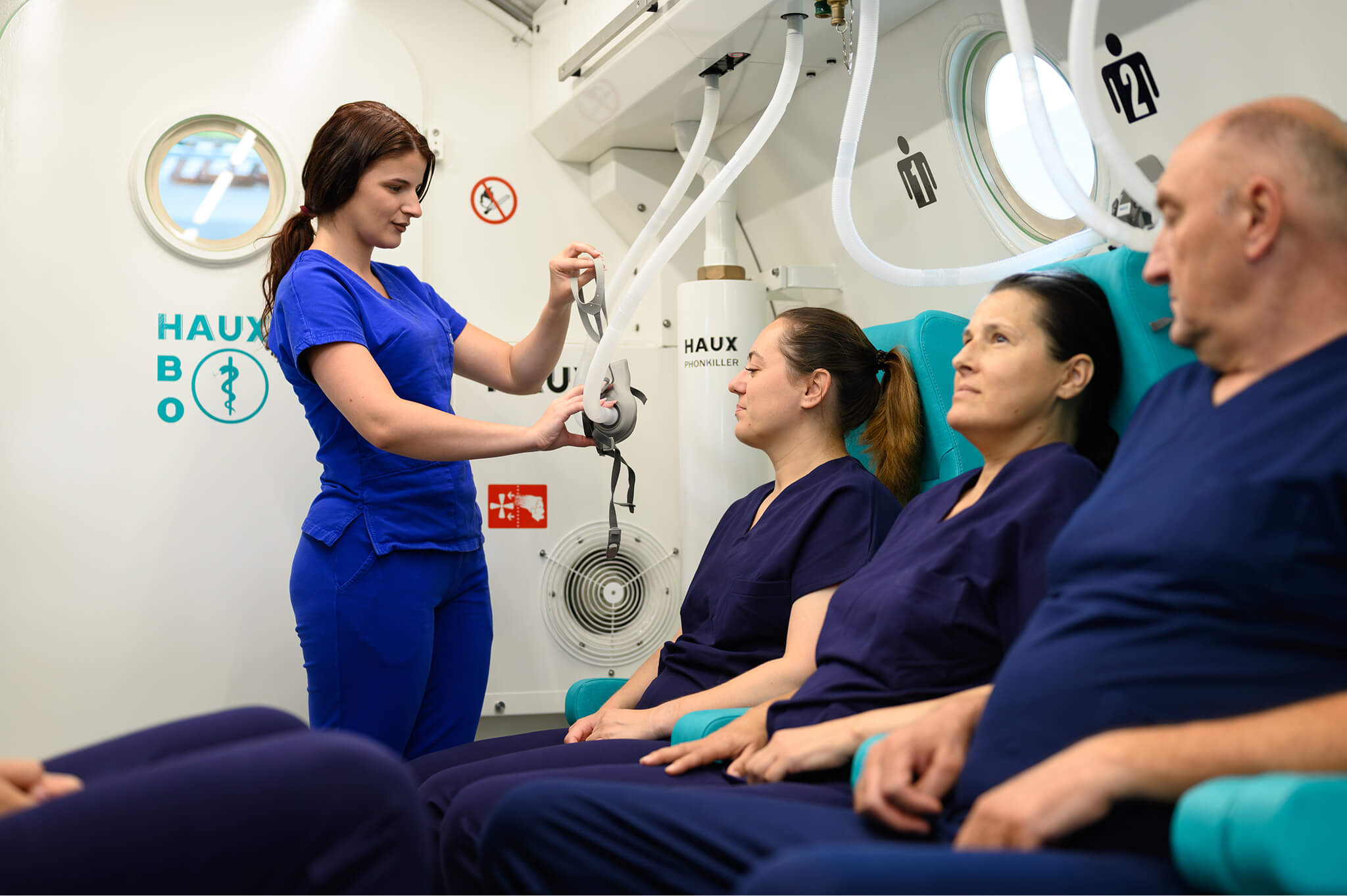
To understand why hyperbaric oxygen therapy helps in these cases, we must know what actually happens inside the hyperbaric chamber. During a session, the patient breathes 100% pure oxygen, in a space in which the pressure of the air is gradually increased, up to values of 2 to 3 atmospheres absolute, depending on the indication. This increased pressure makes the oxygen dissolve in a much larger amount directly in the blood plasma, not only bound to haemoglobin, as under normal conditions. In practice, the blood temporarily becomes capable of transporting several times more oxygen than usual, and this additional oxygen reaches even the poorly vascularised bony areas, where the infection has settled precisely because of the insufficient blood supply.
This additional oxygenation helps the body fight the infection in three ways. The first is that it helps the immune system kill the bacteria more efficiently. The body uses certain white blood cells, called neutrophils, as soldiers that destroy the bacteria, and for that they need oxygen. Indeed, oxygen is the fuel with which they manufacture their weapons against microbes. In an infected bone, where the blood reaches with difficulty, the oxygen is insufficient, and these cells fight much more poorly. And the additional oxygen in the chamber gives them back, temporarily, the power they need.
The second effect is that it helps the formation of new blood vessels in the diseased area, a process called angiogenesis. The more small blood vessels appear, the more easily the antibiotics and the immune cells can reach, in time, even the fragments of dead bone at the centre of the infection, where the usual treatments cannot penetrate. The third effect is that it helps the bone recover more quickly, because the oxygen directly stimulates the cells responsible for building new bone, called osteoblasts, supporting the healing and the bone regeneration after the doctor has surgically removed the infected tissue.
Through these three combined effects, hyperbaric oxygen therapy does not take the place of the antibiotics or of the surgery, but helps both of them work better.
At Hyperbarium, a session of medical hyperbaric therapy takes place in a certified chamber, under the supervision of a medical team, at parameters established individually for each patient, depending on the severity and the location of the infection. Additional details about the concrete way in which such a session works, including the pressurisation and decompression stages, can be found in the dedicated article on the Hyperbarium blog, How does hyperbaric therapy work?, where the process is explained step by step.
It is also worth emphasising that the benefits of hyperbaric therapy are not limited to the direct control of the infection. In patients with associated fractures or with complex bone surgical interventions, the additional oxygenation also supports the process of consolidation of the bone grafts used to reconstruct the areas of bone removed surgically. This double action, both on the infection and on the bone regeneration, explains why hyperbaric therapy is regarded today as a valuable adjunctive instrument in complex orthopaedics, not only as a simple method of improving the general oxygenation of the body.
Is natural treatment a solution for chronic osteomyelitis?
It is natural that, in the face of such a long-lasting and frustrating disease, patients should look for gentler alternatives as well, and the natural treatment of osteomyelitis appears frequently in the searches related to this subject. It is important to state, as clearly as possible, that certain natural measures, such as a diet rich in protein, vitamin C and zinc, giving up smoking or the strict control of the blood sugar in diabetic patients, can indirectly support the capacity of the body to fight the infection and to heal after the treatment. These measures cannot, however, by themselves eliminate an established bone infection, especially when there is a bone sequestrum deprived of vascularisation at its centre.
The reason is the same one explained previously in connection with the antibiotics: as the case report on Garré sclerosing osteomyelitis also shows, any substance administered orally, be it an antibiotic or a natural supplement, reaches the tissues exclusively through the blood. If the central area of the infection no longer has its own blood circulation, no treatment administered systemically, natural or pharmaceutical, can reach there in a sufficient concentration. For this reason, the medical recommendation is clear: the natural treatments can be discussed with the treating doctor as complementary measures of general support for the body, but they must never replace or delay the surgical treatment and the targeted antibiotic therapy, the only ones capable of effectively eliminating the source of the infection.
It is also useful to bear in mind that not even the supplements that directly support bone health, such as calcium or vitamin D, can substitute the medical treatment in the active phase of the infection. Their role is relevant rather in the recovery stage, after the infection has been controlled surgically and with medication, when the body needs additional resources to rebuild the affected bone. The confusion between supporting the recovery and the treatment proper of the infection is one of the most frequent traps into which the patients fall when they look for quick or less invasive solutions for a disease which, by its nature, asks for time and a structured medical approach.
Chronic osteomyelitis requires a treatment plan built for each patient
The treatment of refractory chronic osteomyelitis remains, in all cases, a team effort, coordinated between the infectious disease specialist, the orthopaedic or maxillofacial surgeon and, when it is indicated, the hyperbaric medicine team. At Hyperbarium, hyperbaric oxygen therapy is introduced exclusively as adjunctive treatment, alongside the surgical debridement of the dead bone tissue and the targeted antibiotic therapy, established on the basis of the bacterial cultures collected from the infectious focus, never as a replacement for them. The sessions take place in a certified medical hyperbaric chamber, with 100% oxygen, at pressures of up to 3 atmospheres absolute, under the permanent supervision of a medical team, in a protocol structured over several weeks, with repeated sessions five times a week, similar to the regimens described in the clinical studies mentioned above.
The decision to recommend hyperbaric therapy in a case of chronic osteomyelitis is always taken after a thorough medical evaluation, which takes into account the stage of the disease according to the Cierny-Mader classification, the general state of health of the patient, the results of the previous surgical interventions and the response to the treatments already administered. Those interested in the scientific grounding of these decisions can also consult the section dedicated to studies on the Hyperbarium blog, Scientific studies for hyperbaric therapy, where the relevant research is centralised, organised by categories of conditions.
Before recommending hyperbaric therapy, the Hyperbarium team carries out a complete medical evaluation in which both the indication proper and the safety of the procedure are evaluated for each patient individually. This initial evaluation stage is the one that makes the difference between a well-targeted adjunctive treatment and a generic approach, without real benefits for the patient.
From a practical point of view, a patient who begins such a protocol must know that the results do not appear after one or two sessions. The studies cited previously show clearly that the average number of sessions necessary to obtain remission of the infection varies, depending on severity, between 30 and 60, administered in a daily regimen, five times a week, over the course of several consecutive weeks. Patience and the continuity of the treatment, combined with the careful monitoring of the surgical wound and of the inflammatory markers in the blood, are just as important as the correct choice of the therapeutic protocol.
For patients caught in a vicious circle of repeated treatments and recurrences of the bone infection, the essential message is this: refractory chronic osteomyelitis is not a definitive sentence, but it requires a rigorous, multidisciplinary medical approach and, in the suitable cases, the additional support that the oxygen administered under pressure can offer. A discussion with a medical team specialised in hyperbaric medicine can clarify, for each case individually, whether this adjunctive treatment is indicated and what realistic benefits it can bring to the process of healing of the bone.