


Article reviewed by: Dr. Sturz Ciprian, Dr. Tîlvescu Cătălin and Dr. Alina Vasile
Article updated on: 05-10-2026
Hyperbaric therapy for anxiety: how it works and what benefits it offers
- What does anxiety mean and when does it need treatment?
- Common forms of anxiety
- What are the symptoms of anxiety: emotions, thoughts and physical reactions
- The panic attack: when the alarm peaks within a few minutes
- What happens in the brain during anxiety
- How to get rid of anxiety in a safe and effective way
- Hyperbaric therapy for anxiety: what it actually is
- What studies say about hyperbaric therapy and the emotional symptoms associated with anxiety
- Hyperbaric therapy, a complementary role, not a substitute for the core treatment
- An environment designed for comfort, not only for treatment
- How the therapy is carried out and who needs a careful evaluation
- How long does it take to recover from anxiety?
- Anxiety is treated with a balanced approach
There are days when anxiety does not announce itself with any clear reason. You wake up already tired, with burdensome thoughts before your feet have even touched the floor. You check your phone, look at the clock, remember what you have to do and, all of a sudden, your body seems to have decided that you are in danger: the heart beats faster, breathing becomes shallow, the stomach tightens, and the mind begins to look for explanations.
For someone who has not been through this, it may seem hard to understand how an ordinary meeting, a journey, an email or even a few minutes spent on social media can become sources of tension. For the person with anxiety, however, it is not about having too many worries. It is the persistent feeling that the body has remained stuck in alarm mode, even when there is no immediate danger.
Anxiety can gradually steal seemingly small things: good sleep, concentration, the pleasure of going out with friends, patience, the confidence that you will cope with tomorrow. The good news is that this state can be understood and treated. And the first step is not to force yourself to think positively, but to find out what happens in the body and in the brain when the inner alarm no longer switches off.
In this context, the association between hyperbaric therapy and anxiety deserves to be discussed responsibly. Hyperbaric oxygen therapy may be considered for anxiety disorders, but it does not replace psychotherapy, psychiatric consultation or recommended medication. It can, however, be evaluated as a complementary method in certain medical situations, with realistic objectives and under specialist supervision.
What does anxiety mean and when does it need treatment?
To understand what anxiety means, it is useful to start from its normal role. Anxiety is the body's alarm system. It makes us more attentive when we have something important to do, such as taking an exam, more cautious in a new situation or quicker when there is a real danger. It becomes problematic when the alarm remains active without a proportionate reason, occurs frequently and starts to limit day-to-day life.
Behind this reaction lies rapid communication between several areas of the brain. The amygdala, a small structure involved in detecting threats, works as a kind of alarm sensor. When it interprets a situation as dangerous, it sends signals to the rest of the body. The heart may beat faster, breathing may change, the muscles tense up, and attention focuses on what seems threatening.
Normally, the prefrontal cortex, the area in charge of analysis, planning and decision-making, helps to verify the alarm. In short, it can convey the message: "the situation is unpleasant, but I am safe". In anxiety, this communication can become unbalanced. The amygdala reacts too strongly or too often, and the rational part of the brain can no longer always reduce the danger signal quickly.
World Health Organization estimates that, in 2021, 359 million people were living with anxiety disorders. Globally, these affected approximately 4.4% of the population, and women were affected more frequently than men. The WHO points out that access to treatment remains limited, even though effective interventions exist.
In Romania, the report Romania Country Health Profile 2023, produced under the State of Health in the EU initiative, places anxiety and depression among the most common mental health problems. The estimates used in the report indicate approximately 4% of the population for each of these categories, with the mention that stigmatisation and underdiagnosis may hide part of the real burden.
An anxiety disorder is not equivalent to the unpleasant emotions before an important moment. It involves persistent fear, unease or worry that is hard to control and affects sleep, work, relationships or everyday activities. The diagnosis is made by a psychiatrist or by a clinical psychologist, following a complete evaluation. Sometimes, the doctor may recommend investigations to exclude conditions that can produce similar symptoms, such as thyroid disorders, arrhythmias, anaemia, respiratory diseases, reactions to medication or the effects of stimulants.
Common forms of anxiety
In generalised anxiety, worry does not necessarily focus on a single situation. The person may constantly anticipate problems related to health, family, money, work or the future, even when there is no immediate danger. The mind moves quickly from one subject to another, and as soon as one worry is resolved, another takes its place. The person often knows that they worry too much, but has real difficulty stopping this pattern. This state may be accompanied by:
- persistent fatigue, even after a night of sleep
- irritability and increased sensitivity to minor stress factors
- muscle tension, frequently felt in the neck, shoulders or jaw
- difficulty concentrating, with a sensation of "brain fog"
- unrefreshing sleep, with frequent waking or difficulty falling asleep
In this context, we must also discuss what social anxiety means. This is the intense fear of situations in which the person expects to be judged negatively, criticised, humiliated or rejected. It is not the natural emotion before a presentation, but a persistent fear that is present at all times, in any situation. This is why, for people with social anxiety, it can become difficult to:
- speak in front of others or take an active part in a meeting
- eat or drink in public, if they feel they are being watched
- start a conversation with a person they do not know
- answer the phone or call someone
It is not just shyness, especially when avoidance starts to affect education, career or relationships. The person may turn down important opportunities just to avoid emotional discomfort, and the relief obtained through avoidance tends, in the long run, to reinforce the initial fear.
The question of what somatic anxiety is often arises when the symptoms are predominantly physical, without an obvious medical cause. Somatic anxiety represents the way the emotional alarm is felt in the body: the heart beats faster, the muscles tense up, breathing becomes faster, the stomach tightens and sweating intensifies. These sensations are not invented. They are the expression of the activation of the autonomic nervous system, even if they do not automatically indicate heart or lung disease, which is why a medical evaluation nevertheless remains useful when the symptoms are new or intense.

What are the symptoms of anxiety: emotions, thoughts and physical reactions
Among the symptoms of anxiety are: persistent unease, irritability, diffuse fear, the feeling that the mind cannot stop, difficulty concentrating, insomnia, fatigue, muscle tension, nausea, abdominal discomfort, trembling, sweating, palpitations or the sensation of not getting enough air. These manifestations do not appear in isolation, but form a combined picture, and their intensity can vary from one day to the next, depending on sleep, accumulated stress or physical fatigue.
A less discussed aspect is the duration of these symptoms. Unlike the fleeting emotion before a stressful event, anxiety disorders involve manifestations that usually persist for at least several weeks and tend to reappear in multiple contexts, not just in a single triggering situation. WHO mentions that anxiety disorders can also influence the ability to make decisions, relationships and avoidance behaviour, alongside the emotional and physical symptoms already described.
The panic attack: when the alarm peaks within a few minutes
In the case of a panic attack, the symptoms of anxiety attacks usually appear suddenly and can reach maximum intensity within just a few minutes, unlike generalised anxiety, which sets in more gradually. The person may feel palpitations, trembling, a sensation of suffocation, dizziness, tingling, nausea, chills, chest pain or pressure, fear of losing control or fear that something serious is happening.
According to the clinical criteria used by psychiatrists for diagnosis, a panic attack is confirmed when at least four of these manifestations occur simultaneously, and the episode has a sudden onset that is clearly delimited in time. For this reason, most patients who suffer from this condition can describe the exact moment when it was triggered. These criteria are used precisely in order to differentiate a panic attack from other medical emergencies with similar symptoms.
An important aspect, unrelated to the physical symptoms themselves, is the fear of recurrence. Many people who have been through a panic attack come to fear the next episode and begin to avoid places or situations associated with the first attack. These can be common and seemingly insignificant, but with an extraordinary emotional impact for the person suffering from panic attacks, from a crowded shop or a gym to a means of transport. This anxious anticipation can, in turn, become a factor that maintains the disorder, even during periods without active attacks.
Such an episode can be extremely frightening, especially at its first occurrence, when the person does not yet have a context for what is happening to them. Nevertheless, new chest pain, severe difficulty breathing, fainting or neurological symptoms must be evaluated medically as a matter of urgency. It is not safe to assume from the outset that any symptom is caused by anxiety, because conditions such as heart problems, thyroid disorders or metabolic imbalances can produce similar manifestations and must be medically ruled out before the diagnosis of anxiety is established.
What happens in the brain during anxiety
Anxiety does not have a single cause. It arises through a combination of genetic predisposition, past experiences, prolonged stress, trauma, sleep quality, physical illnesses, the consumption of alcohol, nicotine or stimulants, and the way the brain has learned to interpret danger.
A simplified explanation is that the brain's alarm network becomes too sensitive. The amygdala, a brain structure involved in detecting threats, can react quickly to information perceived as dangerous. The prefrontal cortex, involved in analysis, planning and the regulation of emotional responses, cannot always temper this reaction effectively. The hippocampus, important for memory and for placing experiences in context, can contribute to linking current situations to unpleasant memories or sensations.
Neuroimaging studies have managed to "see" this imbalance in real time. Research published in Neuroscience Letters analysed, through fMRI brain scans, how the amygdala and the prefrontal cortex communicate with each other in people with generalised anxiety disorder. The results showed an abnormally strong functional connection between the two areas, a sign that the "braking" mechanism normally exerted by the prefrontal cortex over the amygdala does not work efficiently. In other words, the brain emits the alarm signal, but the area responsible for checking it fails to reduce the intensity of the reaction in time.
Beyond the nerve circuits, anxiety also involves chemical messengers, called neurotransmitters, through which neurons communicate with each other. Three of the most important in this context are:
- GABA (gamma-aminobutyric acid), the brain's main "calming" neurotransmitter. Its role is to tell the neurons to slow down or stop sending signals. When GABA activity is reduced, the neurons remain in a state of increased excitability, and the brain becomes more prone to alarm reactions.
- Noradrenaline, the substance largely responsible for the physical symptoms of anxiety: the rapid heartbeat, sweaty palms, muscle tension and the state of hypervigilance. It often works together with another substance, called CRH (corticotropin-releasing hormone), which prepares the body for a "fight or flight" response.
- Serotonin, which has a more complex role: depending on the type of receptor it activates, it can reduce or, on the contrary, amplify anxiety. This is one of the reasons why the effect of a treatment on serotonin is not always simple to predict and must be personalised by the doctor.
Another system involved is the hypothalamic-pituitary-adrenal axis, also known as the HPA axis. This is the communication chain between the brain and the adrenal glands and is responsible for releasing cortisol, the main stress hormone. In prolonged stress, elevated cortisol levels can, over time, affect the hippocampus, the structure involved in memory and context, reducing its capacity to "switch off" the stress response. In parallel, cortisol can amplify the reactivity of the amygdala, which creates a circle that is hard to break: more stress, more cortisol, an ever more sensitive brain alarm.
This description does not mean that there is something wrong with the person's brain. It means that the body's protective mechanisms are operating in an overstrained regime, with alarm circuits too active and control circuits too weakened. The good news is that these circuits can be influenced. Psychotherapy, regular sleep, exercise, social support, the treatment of associated illnesses and, when it is indicated, medication can help the brain regain its capacity for regulation, strengthening precisely that connection between the prefrontal cortex and the amygdala which, in anxiety, functions below its normal potential.
How to get rid of anxiety in a safe and effective way
There is no universal plan for getting rid of anxiety. It is treated in a personalised way, because the causes differ from person to person. The choice of interventions depends on the form of anxiety, its severity, the duration of the symptoms, the presence of depression or of other illnesses, the personal history and the patient's preferences.
Psychotherapy is one of the core interventions. Cognitive behavioural therapy helps patients understand the link between thoughts, emotions, bodily reactions and behaviours. For example, someone who feels palpitations may immediately interpret the sensation as a sign of serious danger. The fear grows, the body goes even further into alert, and the palpitations intensify. Therapy can help the person break this circle, without minimising what they feel.
In certain forms of anxiety, exposure therapy carried out gradually and under safe conditions can reduce the fear of situations, places or bodily sensations. The WHO includes psychological interventions based on the principles of cognitive behavioural therapy among the options with the best evidence for anxiety disorders.
Medication may be recommended by the psychiatrist when the symptoms are moderate or severe, when there is associated depression or when psychotherapy alone is not sufficient. The antidepressants used in anxiety, including some from the class of selective serotonin reuptake inhibitors, need time in order to produce an effect. Their choice is not made on the basis of a general recommendation, but according to the history and condition of each patient. It should be noted that the WHO warns that benzodiazepines are not, in general, a solution for long-term use, because of the risk of dependence and their limited long-term effectiveness.
Regular sleep, exercise adapted to physical capacity, reducing alcohol, limiting nicotine and caffeine, regular meals and social contact can complement the treatment. They are not simple solutions, especially for someone who already feels overwhelmed by any factor. But these small actions give the nervous system more predictability and can reduce the factors that maintain the state of alert.
Home remedies for anxiety, supplements and self-medication
Many people first try home remedies for anxiety such as soothing teas, plants with a sedative effect, warm baths, aromatic oils, walks or evening rituals. Some of them can contribute to a feeling of comfort or to a better sleep routine. For example, a calm evening walk or a cup of caffeine-free tea can become a useful signal for the body that rest time is approaching.
However, there is a difference between creating a healthy habit, which really can help you, and trying all kinds of plant mixtures that promise a perpetual state of calm and balance. Plants and supplements are not without risks. They can cause drowsiness, can have adverse effects or can interact with other treatments. Even if they are indeed natural, this does not mean they are necessarily safe for everyone.
In reality, there are no best pills for anxiety, no universal cure for anxiety. A medication that is useful for one patient may be unsuitable for another, depending on other conditions, other medications, pregnancy, breastfeeding, sensitivity to adverse effects or the exact type of anxiety. The same caution is necessary with regard to the phrase anxiety medication without a prescription. Products available without a prescription may contain plants, vitamins, minerals or other substances, but they do not replace the validated treatments for anxiety disorders and must not be combined at random with psychiatric treatment.
Sometimes, mild symptoms can be improved with self-care measures, and the idea of getting rid of anxiety on your own may seem appealing. Breathing exercises, reducing caffeine, creating a sleep routine, a few minutes of physical activity a day and structured self-help materials can be useful. But keep in mind that sometimes asking for help is far more effective than an anxiety treatment chosen by word of mouth. It is advisable to talk to a specialist if the symptoms persist, if repeated attacks appear, if you start avoiding important activities, if you use alcohol or sedatives in order to cope or if thoughts of self-harm appear.
Hyperbaric therapy for anxiety: what it actually is
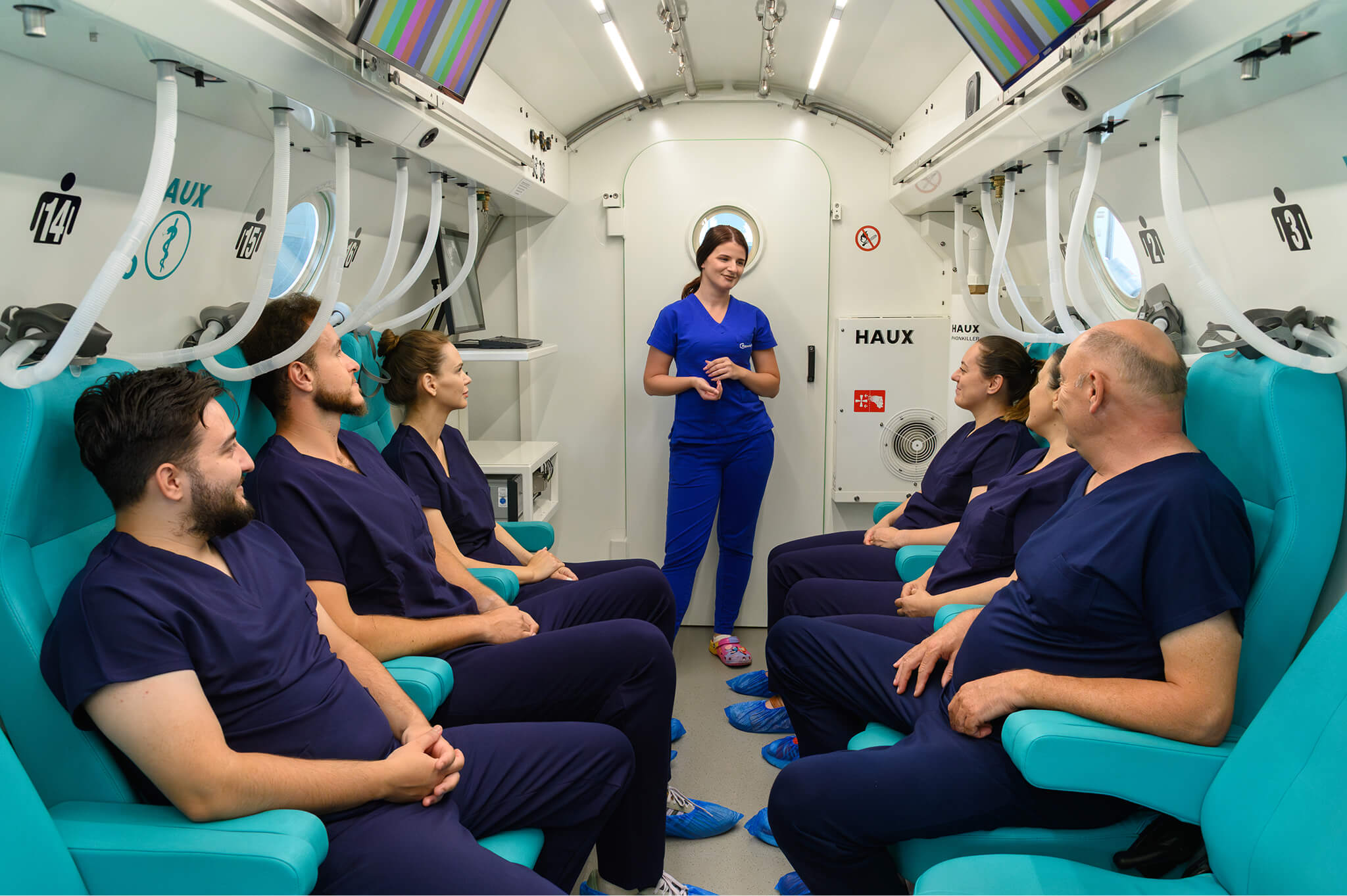
Hyperbaric oxygen therapy, also called HBOT, is a medical procedure in which the patient breathes oxygen at a high concentration inside a pressurised chamber, at a pressure higher than the usual atmospheric pressure. By increasing the pressure, a larger amount of oxygen dissolves in the plasma, the liquid part of the blood, and reaches the tissues, including the brain, more efficiently.
This simple mechanism, more oxygen available under a controlled pressure, underlies an increasingly active field of research: the way HBOT can influence brain structures and processes involved in emotional regulation. Hyperbaric therapy is already used, with established results, in indications such as carbon monoxide poisoning, certain severe infections, carefully selected chronic wounds or complications caused by radiotherapy. To understand the mechanism in depth, you can read the Hyperbarium article on how hyperbaric therapy works.
What makes this field interesting for mental health is the way in which oxygen, administered under pressure, can support the very biological processes we described in the section about the brain. Researchers have observed that hyperbaric oxygen therapy can stimulate two mechanisms directly relevant to the circuits of anxiety:
- an increase in the level of brain-derived neurotrophic factor (BDNF), a protein that supports the formation and strengthening of the connections between neurons. This process is called neuroplasticity and is essential for relearning more balanced emotional responses;
- angiogenesis, that is, the formation of new small blood vessels in the brain tissue, which can improve the blood supply and oxygenation of the areas affected by chronic stress, including the networks that connect the amygdala to the prefrontal cortex.
Thus, if the brain's alarm circuit remains hyperactive because the "control" area (the prefrontal cortex) no longer communicates efficiently enough with the "alarm" area (the amygdala), a sustained supply of oxygen, administered under pressure, could support exactly the processes of repair and neuronal reconnection that this circuit needs in order to regain its balance.
The strongest clinical evidence supporting this potential comes from research on post-traumatic stress disorder (PTSD), a condition that often involves intense anxiety, hypervigilance and sleep disturbances. In a controlled clinical study carried out by the researchers at the Sagol Center for Hyperbaric Medicine and Research in Israel, veterans with PTSD resistant to conventional treatments who followed a protocol of 60 hyperbaric therapy sessions had significant clinical improvements, confirmed both through standardised questionnaires and through brain imaging: visibly increased activity in the prefrontal areas and in the hippocampus, exactly the regions responsible for regulating the alarm response.
The results were also confirmed in a subsequent placebo-controlled study, published in Journal of Clinical Psychiatry: the participants treated with real hyperbaric oxygen had an average decrease of almost 17 points on the clinical scale for PTSD, and a quarter of them reached complete remission of the symptoms, compared with only 3.6% in the placebo group, an important difference showing that the effect is not due merely to the experience of spending time inside a pressurised chamber. You can also read more about this condition in the Hyperbarium article dedicated to post-traumatic stress disorder (PTSD).
These results are encouraging and explain why more and more research centres around the world are investigating the role of hyperbaric therapy in psychiatric conditions with a component of hyperactivation of the brain alarm, such as anxiety. At the same time, it is important to specify that the current data come mainly from studies on PTSD in patients with severe symptoms, treated through an intensive protocol under strict medical supervision, and HBOT is not, at this moment, a standard treatment for generalised anxiety, social anxiety or panic attacks. It remains a complementary method, which can be discussed within an individual medical evaluation, alongside psychotherapy and, when it is the case, medication, not in their place.
What studies say about hyperbaric therapy and the emotional symptoms associated with anxiety
Beyond the results obtained in PTSD, researchers have also begun to study the way hyperbaric therapy influences the anxiety symptoms that occur alongside other neurological conditions, a field in full development, with results that deserve attention.
A relevant example comes from a clinical study included in a systematic review published in 2021: 60 people with incomplete spinal cord injuries, who also presented symptoms of anxiety and depression, were divided into a group treated with hyperbaric oxygen and a control group. After eight weeks, the group that followed hyperbaric therapy recorded a greater reduction in anxiety scores than the control group, a result that aligns with the hypothesis that supporting the processes of neurological recovery, through additional oxygenation, can also have a positive effect on the emotional state.
This type of result outlines a genuinely interesting direction of research. In patients whose anxiety is linked to a neurological condition or to a physical injury, supporting the recovery of the brain and of the tissues through hyperbaric therapy appears to bring benefits on the emotional level as well, not only on the physical one. The authors of the review recommend extending the research through larger studies, carried out in several centres, precisely in order to confirm and to specify more clearly to whom this type of intervention is best suited.
The field is, moreover, in visible evolution. Older assessment reports, such as the one produced by CADTH, the Canadian agency for the assessment of health technologies, in 2014, reflected the early stage of research at that time, when the number of clinical studies available on the subject of hyperbaric therapy in psychiatric conditions was still small. Since then, as shown by the more recent studies on PTSD presented above, research has advanced considerably, and the scientific interest in the role of hyperbaric oxygen therapy in conditions with an emotional component continues to grow.
In short, the current data outline a promising picture: HBOT appears to be able to support the reduction of the symptoms of anxiety when these are associated with a neurological or somatic condition for which the therapy is already medically indicated. As in any field of active research, larger studies are still needed in order to establish with precision which patients benefit the most and under which protocols. For this reason, the decision to use hyperbaric oxygen treatment for people who suffer from anxiety must be taken together with the treating physician.
Hyperbaric therapy, a complementary role, not a substitute for the core treatment
In a well-organised medical programme, hyperbaric oxygen therapy may be perceived by some patients as a period of rest in a controlled environment, with fewer external stimuli. Some patients report a state of relaxation, better sleep or better concentration during the therapy programme. These individual experiences are encouraging, but they remain part of a complete care plan, alongside psychotherapy and, when it is the case, medication, not a substitute for them.
It is not correct to state that anxiety is caused by what people perceive as insufficient oxygenation of the brain. Indeed, there are studied mechanisms and promising hypotheses, but not sufficiently solid evidence to recommend hyperbaric therapy as a curative treatment for anxiety disorders.
If a person has a condition for which hyperbaric therapy is medically indicated and, at the same time, has anxiety, the evaluation must take both problems into account. The objective of HBOT remains the treatment of the medical indication for which it was recommended, and the emotional state must be supported through adequate mental health interventions.
An environment designed for comfort, not only for treatment
For a person with anxiety, the idea of entering a new, unfamiliar medical space can itself be a source of tension. This is why the context in which the therapy takes place matters just as much as the procedure itself.
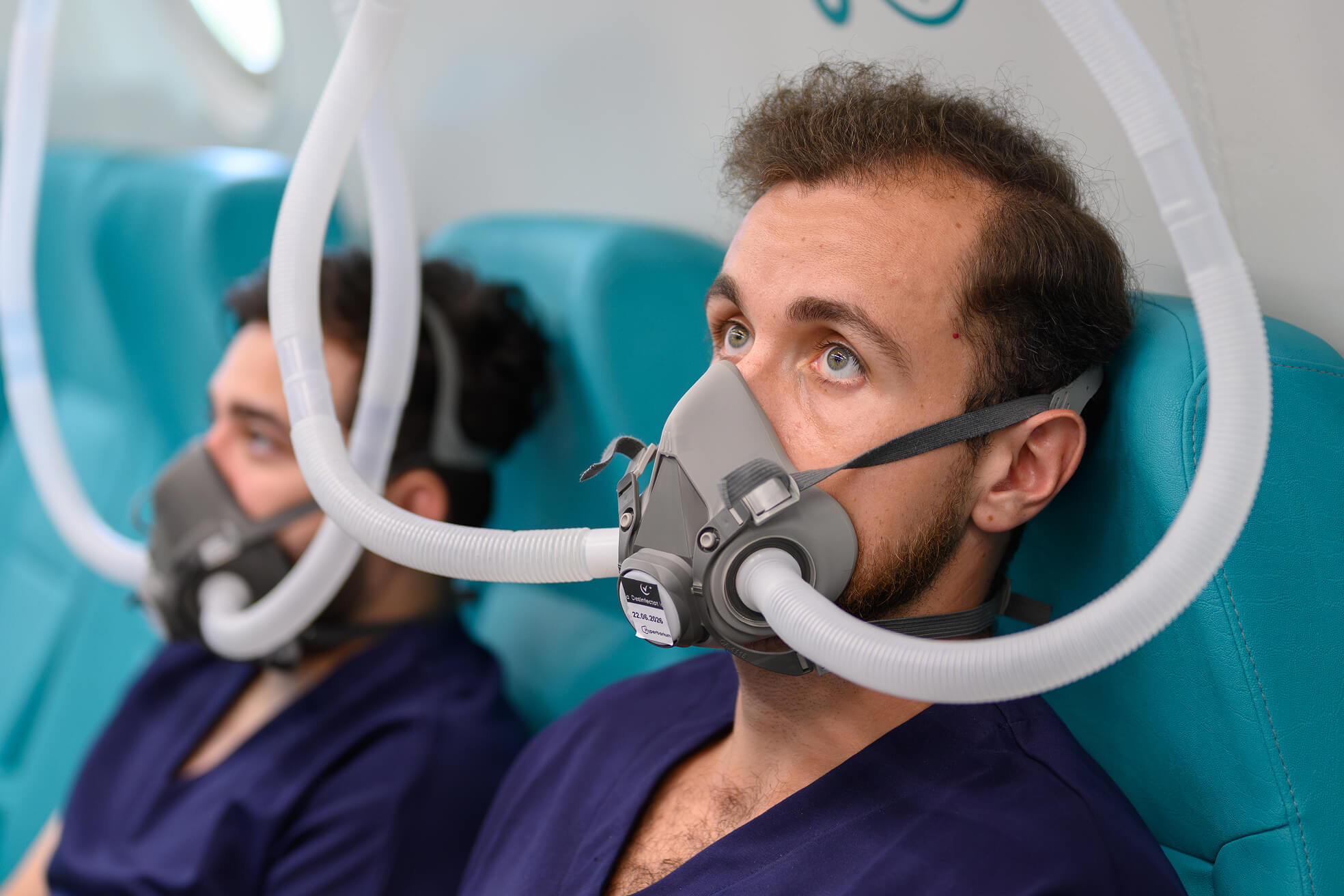
The Hyperbarium Clinic is designed as a modern and welcoming space, with wide, comfortable stations, where the patient does not feel confined or rushed. The staff consists of specialists who are professionally trained, but also approachable and communicative, used to explaining every step before starting, to answering questions and to adapting the pace to the needs of each patient, an essential detail for someone for whom novelty or the lack of information can amplify unease.
The medical team has a multidisciplinary structure, which includes, alongside the physicians specialised in hyperbaric therapy, collaboration with neurology, so that the initial evaluation takes into account the entire medical context of the patient, not only the indication for oxygen therapy. This approach is important especially when anxiety is associated with other neurological or somatic conditions, for which the perspective of several specialists can contribute to a more complete and safer care plan.
The purpose of this setting is not only the correct administration of the therapy, but also the creation of an experience in which the patient feels heard, informed and safe, conditions which, for a person with anxiety, can make the difference between a medical evaluation that is avoided and one that is accepted with confidence.
How the therapy is carried out and who needs a careful evaluation
Hyperbaric therapy is a medical procedure that requires a consultation before the sessions begin. The evaluation includes the history of lung, cardiac, neurological and ENT diseases, the medication being taken, any recent interventions, pregnancy and the ability to tolerate the pressurised environment.
During a session, the patient enters the hyperbaric chamber and breathes oxygen according to the protocol established by the medical team. The increase and decrease of the pressure are controlled. During compression, the sensation in the ears can resemble what you experience in an aeroplane, which is why the patient is taught to equalise the pressure. The duration and the number of sessions are not established generically, but according to the medical indication.
Untreated pneumothorax is an absolute contraindication. Other situations may require caution, the postponement of the sessions or an additional evaluation: acute infections of the ears or sinuses, a cold, certain lung diseases, fever, uncontrolled epilepsy, some oncological treatments and recent procedures on the ears or sinuses. The Hyperbarium article on the contraindications of hyperbaric oxygen therapy details these aspects.
For people with anxiety, claustrophobia deserves to be discussed openly before the first session. If enclosed spaces trigger panic, the procedure can be difficult to tolerate and is not suitable for everyone. An honest evaluation before starting the therapy gives the medical team the information necessary to decide whether the procedure can be carried out safely and with a reasonable level of comfort.

How long does it take to recover from anxiety?
There is no identical recovery period for all patients. The answer to the question of how long it takes to heal from anxiety depends on the type of disorder, the duration of the symptoms, the quality of sleep, the current stress, the presence of depression, of traumas, of alcohol or stimulant consumption, of associated physical illnesses and on how well the treatment fits.
For some people, the first changes appear after a few psychotherapy sessions or after a few weeks in which they stabilise their sleep, routine and level of activity. For others, the process is longer and needs adjustments. When medication is recommended, the full effect may appear within a few weeks, and monitoring with the doctor is important.
More useful than pursuing a deadline is to notice the concrete progress: you sleep better, you have fewer panic episodes, you avoid less, you can resume your activities, you recover more quickly after a moment of stress. In this way, it turns into a personalised recovery plan, with small and measurable objectives.
Do not stop psychiatric medication suddenly and do not replace it with supplements or procedures without the doctor's agreement. Well-conducted treatment means correct evaluation, adapted interventions, monitoring of the evolution and adjusting the plan when necessary.
Anxiety is treated with a balanced approach
At some point, anxiety can make life seem dominated by negative scenarios, physical symptoms and avoidance. But this chapter does not have to be a definitive one. With the right support, the symptoms diminish, the energy and mental calm are regained, and control over one's own life can be restored, step by step. Psychotherapy, in particular the cognitive behavioural approaches, together with psychiatric consultation when it is necessary, form the core of a treatment with proven results and real chances of success.
Alongside these core interventions, the horizon is opening up more and more towards complementary solutions that are scientifically well grounded. As an alternative treatment for anxiety, hyperbaric therapy makes sense only as a complementary element, not as a substitute for psychotherapy or medication, and it is truly relevant especially for the people whose emotional symptoms are linked to a neurological or somatic condition for which HBOT is already medically indicated. In these situations, an individual evaluation can show whether the therapy makes sense as part of a complete care plan.
What matters most is not to be left alone with these symptoms. If anxiety affects your sleep, your capacity to work, your relationships or your pleasure in doing ordinary things, the best step forward is a discussion with your family doctor, a clinical psychologist or a psychiatrist. In most cases, such a conversation opens the path to improvement far more quickly than you would think. And if your situation also includes a medical indication for hyperbaric oxygen therapy, the Hyperbarium team is ready to assess eligibility and to build a realistic plan for you, in which hyperbaric therapy brings, safely, its contribution to your recovery.