


Article reviewed by: Dr. Sturz Ciprian, Dr. Tîlvescu Cătălin and Dr. Alina Vasile
Article updated on: 05-10-2026
Radiation proctitis: what it is, how it is treated and when hyperbaric therapy can help
- What is radiation proctitis
- The types of radiation proctitis
- What are the symptoms of radiation proctitis?
- How radiation proctitis is diagnosed
- Conventional treatment of radiation proctitis
- How hyperbaric therapy helps the healing of radiation proctitis
- What the studies say about hyperbaric oxygen treatment for radiation proctitis
- How widespread is radiation proctitis in our country
- What else you can do: diet, lifestyle and natural approaches
- When you need urgent medical help
- How radiation proctitis is treated at Hyperbarium Oradea
Radiotherapy is one of the essential treatments against cancer. Modern techniques allow a very precise dose of radiation to be delivered to the tumour, protecting as much as possible the nearby healthy organs. However, when cancers located in the pelvis are treated, such as cancers of the prostate, cervix, endometrium, urinary bladder or rectum, part of the rect may lie close to the irradiated area.
Some digestive effects appear during radiotherapy itself and improve once the treatment is finished. Others develop slowly, after months or even years. Rectal bleeding, changes in bowel habits, urgency to go to the toilet or pain can be the manifestations of an injury known as radiation proctitis.
In the chronic forms we are no longer talking just about inflammation. Radiation can damage the very small vessels that feed the rectal tissue, favouring ischaemia, fibrosis and difficult healing. That is why the treatment is not the same for every patient. It may include medication and local measures, endoscopic procedures and, in suitable cases, hyperbaric oxygen therapy.
What is radiation proctitis
Radiation proctitis is an inflammation of the rectal lining caused by exposure to the ionising radiation used in the treatment of cancers in the pelvic area: prostate, cervix, endometrium, urinary bladder or rect. The medical term sometimes used in the literature is actinic proctitis. Actinic describes the effects of radiation on living tissues, whether it is the skin, mucous membranes or blood vessels.
To understand why exactly this complication occurs, you need to think a little about the anatomy of the pelvic area. The rectum is positioned right next to the prostate, the cervix and the urinary bladder, that is, a few millimetres away from the organs most frequently targeted by radiotherapy. Modern radiotherapy machines are increasingly precise and increasingly image-guided, but no treatment can target tumour cells perfectly without affecting the healthy tissue around them at all. Part of the radiation energy inevitably reaches the rectal wall as well, simply because it lies so close to the treated area.
What actually happens at cellular level when the rectum is exposed to radiation? Ionising radiation does not only destroy tumour cells; it also affects the healthy cells of the rectal lining. But, more importantly, it injures the endothelium, the thin layer of cells that lines the inside of the small blood vessels in the rectal wall. This vascular injury is, in fact, the central reason why radiation proctitis does not behave like an ordinary inflammation that goes away by itself in a few days. The affected vessels progressively narrow, the supply of oxygenated blood to the tissue decreases, and the area remains chronically weakened, prone to bleeding, to ulcers and, in severe cases, to fistulas or to narrowings (strictures) of the rectum.
Radiation proctitis is not a rare or exotic complication, but a recognised and documented consequence of pelvic radiotherapy, common enough that there are international medical guidelines dedicated exclusively to its management. Published studies show that it affects between 5% and 20% of patients treated with radiotherapy in the pelvic area. In other words, if you or a family member have had radiotherapy for a pelvic cancer and are experiencing persistent digestive symptoms, you are not an isolated case, and the existence of effective treatments, including hyperbaric oxygen therapy, means that this condition can be managed with real results.
The subject is also relevant for Romania. According to GLOBOCAN 2022 Romania, the International Agency for Research on Cancer estimated 104,661 new cancer cases in Romania in 2022. Colorectal cancer accounted for 13,541 cases, prostate cancer 10,442, bladder cancer 5,157, and cervical cancer 3,368. Some of the patients with these tumours have an indication for pelvic radiotherapy. These figures do not represent the number of cases of radiation proctitis, but show the size of the oncological population in which late effects of treatment can occur.
The types of radiation proctitis
Not all cases of radiation proctitis manifest themselves in the same way, and understanding the form you are dealing with helps you better understand why the doctor recommends one treatment and not another. Doctors divide the disease, first of all, according to the time of onset, acute and chronic, and the chronic form is also analysed from the perspective of how it presents at colonoscopy, as well as the severity of symptoms. These details directly explain why some patients only need a few suppositories, while others need more sustained treatment, such as hyperbaric oxygen.
Acute radiation proctitis appears either during the period when the patient is undergoing radiotherapy, or in the first three months after the treatment has ended. In practice, the radiation also reaches the layer at the surface of the rectum, that is, the soft, moist tissue that lines the inside of the rectum, just as the skin lines the outside of the body. This layer is made up of cells that renew themselves very quickly, which is why it is the first to be affected by radiation. The result is felt through diarrhoea, through the sudden and hard-to-control urge to go to the toilet and through a general abdominal discomfort, and sometimes mild bleeding can also occur. The good news is that, in most cases, the body manages to repair this tissue by itself, and the symptoms disappear completely in four to six weeks, without leaving any traces.
Chronic radiation proctitis is the more serious form, the one we talk about when we discuss hyperbaric therapy. An important thing to remember is that this form is not, in fact, a continuation of the acute one. The two forms can occur completely independently of each other. The chronic form usually sets in 8-12 months after the end of radiotherapy, but there are also cases where it appears surprisingly late, 20 or even 30 years after treatment. Its cause is different from that of the acute form. In this case, the problem is no longer at the level of the surface lining, but at the level of the small blood vessels in the rectal wall, which narrow slowly, year after year. With fewer functional vessels, the rectal tissue constantly receives less oxygen than it needs, and this chronic lack of oxygen is the reason why the area can no longer repair itself. This is the reason why hyperbaric oxygen, which brings a large surplus of oxygen directly into the blood, can help.
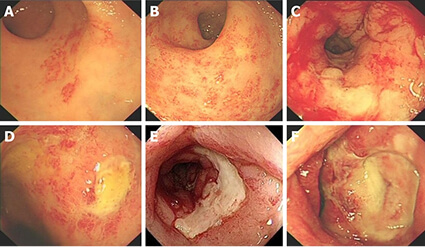
The predominantly inflammatory form is a subtype of chronic proctitis that the doctor sees when performing a colonoscopy. In this subtype, the lining appears swollen, paler than normal and with small superficial ulcerations, that is, areas where the surface layer has been eroded, like a small open wound.
The predominantly haemorrhagic form is the subtype in which the lining has become very fragile and has developed telangiectasias, small, dilated blood vessels that are visible at the surface and that bleed very easily, sometimes even just from the passing of stool. This is, in fact, the subtype that responds best to hyperbaric oxygen treatment.
The mixed form is, as the name suggests, a subtype in which the patient has, at the same time, both inflamed areas and areas with fragile vessels that bleed, practically a combination of the two forms described above.
The mild grade of the disease means symptoms that occur from time to time, a passing discomfort and, possibly, very little blood, hard to notice with the naked eye. At this level, local treatment, suppositories or enemas with substances that protect and soothe the lining, is usually sufficient.
The moderate grade means that bleeding and discomfort occur more often, but without serious structural complications, such as narrowing of the rectum. At this level, the doctor may recommend argon plasma coagulation. This is an endoscopic procedure through which fragile blood vessels are "sealed" with the help of an electric current transmitted through a gas called argon, or, in cases that do not respond to this treatment, hyperbaric oxygen.
The severe grade appears when the bleeding becomes persistent, the rectum begins to narrow (stricture), which makes defecation difficult and painful, and deep ulcerations appear, that is, wounds deeper than the superficial ones described earlier. At this level, hyperbaric oxygen is frequently recommended as a second- or third-line treatment, when simpler methods have not produced sufficient results.
The grade with major complications is the most serious, including fistulas, abnormal channels that form between the rectum and neighbouring organs, such as the urinary bladder or vagina, or complete obstruction of the rectum. These situations can no longer be managed by medical treatment alone; they require urgent surgical intervention.
What are the symptoms of radiation proctitis?
Radiation proctitis manifests itself mainly through rectal bleeding, diarrhoea, pain in the rectum and a feeling of incomplete defecation. It offers a fairly recognisable symptomatic picture, which helps towards a relatively quick diagnosis when the patient reports these symptoms to their attending physician. An international validation study of a specific questionnaire for radiotherapy, EORTC QLQ-PRT20, carried out on 358 patients from six countries and published in Radiation Oncology, identified five main categories of impact on the daily life of patients: bowel control, bloating and gas, emotional function, pain and involuntary leakage, a scientific confirmation of the fact that the disease affects not only the body, but also the patient's social and professional life.
The most common signs you can notice are:
- Blood in the stool after radiotherapy, usually in the form of mild, intermittent rectal bleeding, caused by the fragile telangiectasias described in the previous section. A study published in World Journal of Gastroenterology shows that persistent bleeding can lead to iron deficiency anaemia, and some patients end up needing repeated transfusions if the bleeding is not treated in time.
- Diarrhoea after radiotherapy, along with tenesmus (the feeling of not being able to empty the bowel completely, even after you have been to the toilet) and faecal urgency, that is, the sudden and hard-to-delay urge to go to the toilet.
- Rectal pain after radiotherapy, usually more intense during defecation or immediately after.
- Rarer signs, found in the advanced forms: mucus discharge, occasional incontinence or, in severe cases, the structural complications (narrowing, persistent ulcers, fistulas) already discussed in the subsection about the types of the disease.
An article published in PMC (NIH), authored by Karamanolis and colleagues, confirms the fact that, although many mild cases improve spontaneously, chronic bleeding from radiation proctitis may require careful monitoring of haemoglobin levels, precisely to avoid the onset of severe anaemia without the patient realising how much blood they have lost, over time, through episodes that seem minor.
The intensity of symptoms varies enormously from one patient to another. Some have occasional discomfort, easy to manage, others live with daily symptoms that seriously affect their ability to work, to socialise or, simply, to have an ordinary day without constant planning around access to a toilet.
An essential aspect to keep in mind is that these symptoms can appear a long time after the end of radiotherapy, as we explained in the subsection about the types of the disease; the chronic form can begin years after the treatment. That is why many patients do not immediately make the connection between their current symptoms and an oncological treatment undergone a long time ago. Anyone who has had radiotherapy for a pelvic cancer and notices bleeding or changes in bowel habits should mention this history to the doctor, no matter how much time has passed since the treatment.
How radiation proctitis is diagnosed
The diagnosis begins with the medical history. It matters what type of cancer it was, the area that was irradiated, when the radiotherapy took place, the dose and the technique used, when the symptoms appeared and the associated oncological treatments. Blood tests may be necessary, in particular the full blood count and the assessment of iron reserves if there is recurrent bleeding.
Examination of the rectum by rectoscopy, sigmoidoscopy or colonoscopy allows the doctor to see the lining directly. In radiation proctitis, telangiectasias, fragility of the lining, bleeding, ulcers or areas of stricture can be observed.
A biopsy is not done automatically. In heavily irradiated tissues, vascularisation and healing capacity may be reduced, and the need to take a biopsy must be carefully assessed by the gastroenterologist or the colorectal surgeon.
The correct diagnosis is important especially in the context of adverse effects of radiotherapy for prostate or of other complications after pelvic radiotherapy. Not every symptom that appears after radiotherapy has the same cause and, consequently, nor the same treatment.
Conventional treatment of radiation proctitis
First-line treatment for radiation proctitis usually includes conservative medical measures, applied directly to the rectum: suppositories or enemas with sucralfate, which form a protective layer on the damaged lining, mesalazine (an anti-inflammatory also used in inflammatory bowel diseases), metronidazole for controlling the local bacterial flora and, in some protocols, enemas with short-chain fatty acids, which help the nutrition of the cells in the rectal wall. These measures are usually sufficient for the mild forms, with intermittent symptoms and without structural complications.
When the bleeding persists because of the fragile blood vessels described above, the reference endoscopic treatment is argon plasma coagulation (APC), a minimally invasive technique through which an electric current transmitted through an inert gas seals the abnormal vessels on the lining, without affecting the surrounding tissue. Published studies confirm the effectiveness of this method as a second-line treatment for bleeding refractory to medication. An older alternative, used more rarely today because of the risks, is the local application of formalin, which has a similar vessel-sealing effect on the bleeding vessels.
The problem is that a significant proportion of patients do not respond sufficiently to these measures, especially those with chronic, refractory forms, in which the deep vascular lesions continue to limit healing regardless of the local treatment applied or the number of repeated coagulation sessions. For these patients, the clinical guideline of the American Society of Colon and Rectal Surgeons (ASCRS) has recommended, over the last twenty years, an alternative increasingly firmly supported by evidence: hyperbaric oxygen therapy.

How hyperbaric therapy helps the healing of radiation proctitis
Hyperbaric therapy helps the healing of radiation proctitis by acting directly on the root of the problem: the chronic lack of oxygen in the rectal wall, caused by the blood vessels damaged by radiation. A reference medical framework, developed by the researcher Robert Marx and cited in the guidelines of the Undersea and Hyperbaric Medical Society (UHMS), explains the effect of hyperbaric oxygen on irradiated tissues through three complementary mechanisms, which act simultaneously, not in isolation. These are the stimulation of the formation of new blood vessels, the reduction of fibrosis (the rigid scar tissue that replaces healthy tissue) and the mobilisation of stem cells from the bone marrow.
The first mechanism, angiogenesis, works as follows: the increased pressure inside the hyperbaric chamber causes a much larger amount of oxygen to dissolve directly in the blood plasma. Thus, the blood transports oxygen even without the help of red blood cells, which is essential in areas where the blood vessels are damaged and circulation is reduced. This surplus of oxygen activates a protein called hypoxia-inducible factor (HIF-1), which in turn stimulates the production of vascular endothelial growth factor (VEGF), a substance that "gives the command" to the cells in the walls of the blood vessels to multiply and form new capillary networks in the damaged area.
The second mechanism concerns the reduction of fibrosis. Over time, radiation leaves behind a rigid tissue, poor in blood vessels, which replaces the original elastic and well-vascularised tissue. Hyperbaric oxygen stimulates the fibroblasts, the cells responsible for producing collagen, the basic material of connective tissue, to work more efficiently and to produce tissue of better quality, less rigid and better supplied with blood.
The third mechanism, perhaps the most surprising, is the mobilisation of stem cells. A study carried out by the team of researcher Stephen Thom and published in American Journal of Physiology demonstrated that exposure to hyperbaric oxygen doubles, after a single session, the number of stem cells circulating in the blood, and after 20 repeated sessions, this number increases eightfold. The mechanism occurs through the stimulation of the production of nitric oxide, a substance that "releases" the stem cells from the bone marrow and sends them to the damaged areas of the body, where they contribute to the reconstruction of the blood vessels and of healthy tissue.
A study published in the journal PLOS ONE confirms that exactly these combined mechanisms, neovascularisation, the mobilisation of stem cells and the improvement of fibroblast function, explain the benefits observed clinically in patients with radiation proctitis and with other late tissue injuries caused by radiotherapy. It is important to point out that hyperbaric oxygen as a treatment for the effects of radiotherapy is not an alternative to oncological treatment, but a complement used after it has been completed, dedicated exclusively to managing the late injuries of healthy tissues.
A standard hyperbaric therapy protocol for post-radiotherapy injuries involves between 30 and 60 sessions, usually carried out daily, on weekdays, each session lasting between 70 and 90 minutes, at a pressure of 2.0 to 2.5 atmospheres absolute. The exact number of sessions is established individually, depending on the severity of the symptoms and the response observed during the treatment.
It is worth mentioning that the same mechanism, the reoxygenation of pelvic tissues chronically damaged by radiation, is also responsible for the favourable results observed in the treatment of radiation cystitis, a similar condition that affects the urinary bladder instead of the rectum. You can read more about the chronic indications of hyperbaric therapy, which include both cystitis and radiation proctitis, on our page dedicated to chronic conditions.
What the studies say about hyperbaric oxygen treatment for radiation proctitis
If you are dealing with radiation proctitis or have a family member going through it, you probably want to know one simple thing: does hyperbaric therapy really work, or is it just a promising theory? The answer is important, because a treatment involving dozens of sessions deserves to be supported by real evidence, not just medical logic. The good news is that HBOT for radiation proctitis has been tested in several serious clinical studies, over almost thirty years, and the results are, for the most part, consistent.
The basic idea is simple: chronic radiation proctitis occurs because of the lack of oxygen in the rectal tissue, as we explained in the previous chapters. The hyperbaric chamber temporarily increases the amount of oxygen the blood can transport to these areas, thus giving the body the possibility to repair its damaged blood vessels by itself.
The most important study in this field, the randomised clinical trial of Robert Clarke and collaborators, published in International Journal of Radiation Oncology, Biology, Physics, is the kind of study considered the most reliable in medicine. 120 patients with radiation proctitis who did not respond to the usual treatments were divided, at random, into two groups, without them or the doctors knowing who was receiving the real treatment. One group breathed pure oxygen in the hyperbaric chamber, the other breathed ordinary air, at near-normal pressure. The results showed that, out of three patients treated with real hyperbaric oxygen, one had a clear improvement that they would not have had without the treatment. This study, known as HORTIS-IV, has remained a reference for current medical guidelines.
We must also mention that other studies confirm these results:
- The study published in Journal of Vascular and Interventional Radiology followed 10 patients with radiation proctitis resistant to medical treatments or to laser. After hyperbaric oxygen therapy for proctitis, rectal bleeding stopped completely in four out of nine patients and improved in another three, and pain disappeared completely in three out of five patients who had it before the treatment.
- The ten-year study carried out at the Underwater and Hyperbaric Medicine Centre in Lisbon, published in Frontiers in Oncology, showed that almost two thirds of patients (62.5%) were completely cured, and almost all the others (31.8%) had a partial improvement. Rectal bleeding was resolved in 93.7% of patients, that is, in almost all of those who had this problem.
- The Cochrane systematic review gathered the results of several studies and confirmed that patients treated with hyperbaric oxygen have considerably higher chances of healing than untreated ones, a conclusion considered very solid in medicine, because Cochrane reviews are among the most rigorous evaluations of scientific evidence that exist.
On the basis of this large body of evidence, an analysis published in 2025 shows that the Multinational Association of Supportive Care in Cancer (MASCC) currently recommends, explicitly, hyperbaric therapy for post-radiotherapy injuries of the rectum, not as an experimental option, but as a treatment with proven benefits for those who have not responded sufficiently to standard treatments.
Taken together, these studies draw a fairly clear conclusion: the treatment of proctitis after radiotherapy with hyperbaric oxygen does not cure all patients, but offers a real chance of improvement or healing to a large proportion of those who have not responded to standard treatments, especially in the haemorrhagic forms, the most frequently studied. The consistency of the results, obtained in different centres, from different countries and over three decades, is the reason why the use of hyperbaric oxygen for the effects of radiotherapy has moved from being a last-resort option to a firm recommendation in the specialty guidelines.

How widespread is radiation proctitis in our country
Romania is facing a significant number of new cancer cases every year, and an important part of these involves organs in the pelvic area, frequently treated with radiotherapy. According to Globocan data cited in the National Cancer Control Plan of the Ministry of Health, 98,886 new cancer cases were registered in Romania in 2020, of which 53,881 in men and 45,005 in women. Only for prostate cancer, one of the most frequent indications for pelvic radiotherapy in men, the Globocan data from 2022, cited by Bayer Romania, show 10,442 new cases in Romania, representing 18.2% of all cancers diagnosed in men.
In women, cervical cancer remains one of the most important indications for pelvic radiotherapy in Romania. According to a specialist material of the Society of Obstetrics and Gynaecology of Romania (SOGR), this form of cancer accounts for 15% of all malignant tumours diagnosed in women in Romania, a considerably higher share than the European average, where screening is more extensive.
These figures do not directly tell how many Romanians suffer from radiation proctitis, because, at the moment, there is no national registry dedicated to this complication. However, they clearly show how many patients are, every year, at risk of developing it, because each of these people treated with pelvic radiotherapy counts among the 5-20% documented in the international studies cited earlier in the article. In other words, even if you do not have an exact number, you can be sure that you are not an isolated case, but part of a medical reality encountered frequently in our country as well.
There is, however, one aspect that concerns you directly, regardless of the general statistics about cancer. A recent report by the OECD together with the European Commission shows that 87% of radiotherapy treatments in Romania are provided as outpatient services. In practice, this means that most patients continue their recovery at home, without constant medical monitoring, which is why recognising the signs of proctitis after radiotherapy in time depends, to a large extent, on the patient and their family, not on an automatic check-up at the hospital. This is exactly what makes correct information about the adverse effects of radiotherapy for prostate or about the complications after pelvic radiotherapy not a mere technical detail, but a concrete step towards seeking help more quickly, when needed.
What else you can do: diet, lifestyle and natural approaches
Many patients look for a natural treatment for radiation proctitis, after a treatment considered toxic, or as support alongside the medical measures. However, plants are not the solution for this disease. Still, some dietary and lifestyle habits can truly help to reduce discomfort. A diet low in insoluble fibre during periods of acute symptoms, avoiding irritating foods such as very spicy ones, alcohol or coffee in excess, and adequate hydration can reduce the frequency of bowel movements and the mechanical irritation of an already weakened lining. Some patients report benefits from probiotic supplementation, which can help balance the gut flora, although the scientific evidence for this specific aspect is still limited.
It is absolutely necessary to point out, however, that no natural remedy documented so far can substitute proper medical treatment in cases of moderate or severe radiation proctitis, especially when there is active bleeding or structural injuries such as ulcerations or strictures. Natural approaches can have a complementary role, supporting digestive comfort, but the diagnosis, endoscopic monitoring and therapeutic decisions must remain in the hands of a specialist doctor, ideally one with experience in the late effects of radiotherapy.

When you need urgent medical help
Not every rectal bleeding or episode of diarrhoea in a patient who has undergone radiotherapy in the past requires an emergency visit, but there are signals that must not be ignored. Heavy, persistent bleeding or bleeding that causes a feeling of marked fatigue, pallor or palpitations can indicate significant anaemia and requires immediate evaluation, possibly with a blood transfusion. Intense abdominal pain, fever, the inability to pass gas or stool, or the signs of a possible bowel obstruction are also reasons for an urgent presentation to the emergency room, in order to exclude more serious complications such as perforation or fistulas.
In all other situations, the appropriate pace is that of a scheduled evaluation by the attending gastroenterologist or oncologist, who can decide, depending on the severity and evolution of the symptoms, whether the patient is a candidate for standard medical treatments or for a hyperbaric therapy scheme for radiation proctitis, when the response to conventional treatments is insufficient.
How radiation proctitis is treated at Hyperbarium Oradea
The good news is that radiation proctitis, even in its chronic and refractory forms, can be managed effectively, and at the Hyperbarium Clinic in Oradea this translates into a clear, structured process, designed specifically for oncology patients dealing with the late effects of radiotherapy.
Everything begins with a thorough evaluation, in which the doctor discusses the complete oncological history, from the type of cancer, the dose and technique of radiotherapy used, the treatments already undergone and the results of recent endoscopic investigations. This stage is essential for correctly establishing the severity of the disease and for personalising the treatment scheme, instead of applying a standard protocol, identical for all patients.
The actual hyperbaric oxygen therapy sessions for radiation proctitis take place in the clinic's multiplace hyperbaric chamber, one of the most advanced in Europe: equipment manufactured in Germany, classified as a Class IIB medical device, with a Class A safety standard, the same category used in the large university clinics in Germany, France, Italy or Israel. The chamber has a capacity of 16 seats, operates with 100% purity medical oxygen and can reach a working pressure of up to 3 ATA, parameters that allow exactly the protocols described in the clinical studies discussed above. The investment of 1.5 million euros in this equipment reflects the clinic's commitment to safety and to real medical results, not just to the patient's comfort.
Throughout the treatment, the patient is monitored by a multidisciplinary team, made up of doctors with advanced competences in hyperbaric medicine and with experience accumulated in hospitals and medical centres in Romania, Germany and the United Kingdom. All the staff are certified according to European standards, and Hyperbarium is currently the only private clinic in Romania affiliated simultaneously to EUBS and to UHMS, the two international reference organisations that set the guidelines and safety standards in the field of hyperbaric medicine.
The number of sessions needed usually varies between 30 and 60, depending on the severity of the symptoms, the form of radiation proctitis (inflammatory, haemorrhagic or mixed) and the response observed during the treatment, exactly the aspects explained in the previous sections of this article. You can find out more about the general principles of this therapy and its approved indications, including for recurrent infections and complex tissue injuries, on our complete page about hyperbaric medicine or in the article dedicated to the general benefits of hyperbaric therapy.
If you or a family member are dealing with persistent symptoms after a pelvic oncological treatment, the most suitable first step is a discussion with the attending physician, followed, if appropriate, by an appointment at the Hyperbarium Clinic in Oradea, at the number 0359 44 22 55, for the assessment of eligibility for hyperbaric oxygen therapy, with benefits documented in the case of chronic radiation proctitis. With an experienced medical team and state-of-the-art equipment, the real chances of improvement, already confirmed by the clinical studies presented in this article, are closer than they seem at first sight.